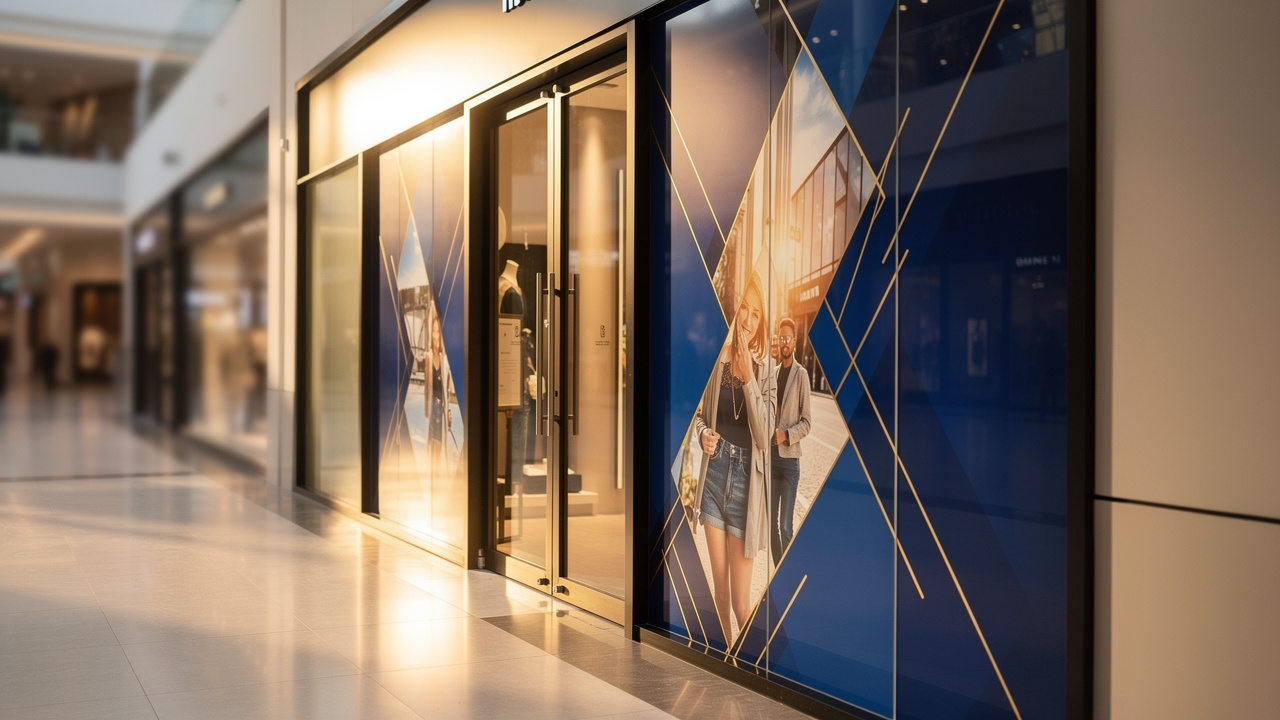
Glass doors and display windows sit at eye level, yet many stay underused or hidden behind peeling vinyl. For Dubai’s busy retail scene, that wastes prime branding space. UV printing on glass solves this by putting high‑resolution color directly onto the surface, without films or glue.
UV printing uses ultraviolet light to cure special inks so they harden on the glass in seconds. The result is durable, vivid storefront graphics that hold up against heat, sand, and strong sunlight. This guide focuses on how the process works on glass, why it suits storefronts, how Waseem Printing Services manages projects, and which challenges matter most.
Stay with this guide to see how glass doors and windows can turn into long‑lasting brand displays instead of empty, clear panels.
Key Takeaways
UV printing bonds directly to glass surfaces. The ink cures into a solid layer, so no vinyl, film, or adhesive sits between the graphic and the glass.
UV‑cured inks resist scratching and fading in Dubai’s harsh UV exposure. Storefront graphics keep their color longer, which stretches maintenance cycles and makes reprints less frequent.
Color accuracy and custom sizing support multi‑location brands. Each branch can share the same colors and layouts, so logos and campaigns stay aligned on every glass door and window.
Waseem Printing Services manages UV projects from design through delivery. The team handles artwork checks, printing, finishing, and logistics, so clients work with one partner instead of several vendors.
Retail, hospitality, and corporate interiors use UV‑printed glass more every year. Designers specify printed glass for doors, partitions, and display windows, turning the material into both structure and branding surface.
What Is UV Printing on Glass and How Does It Work?
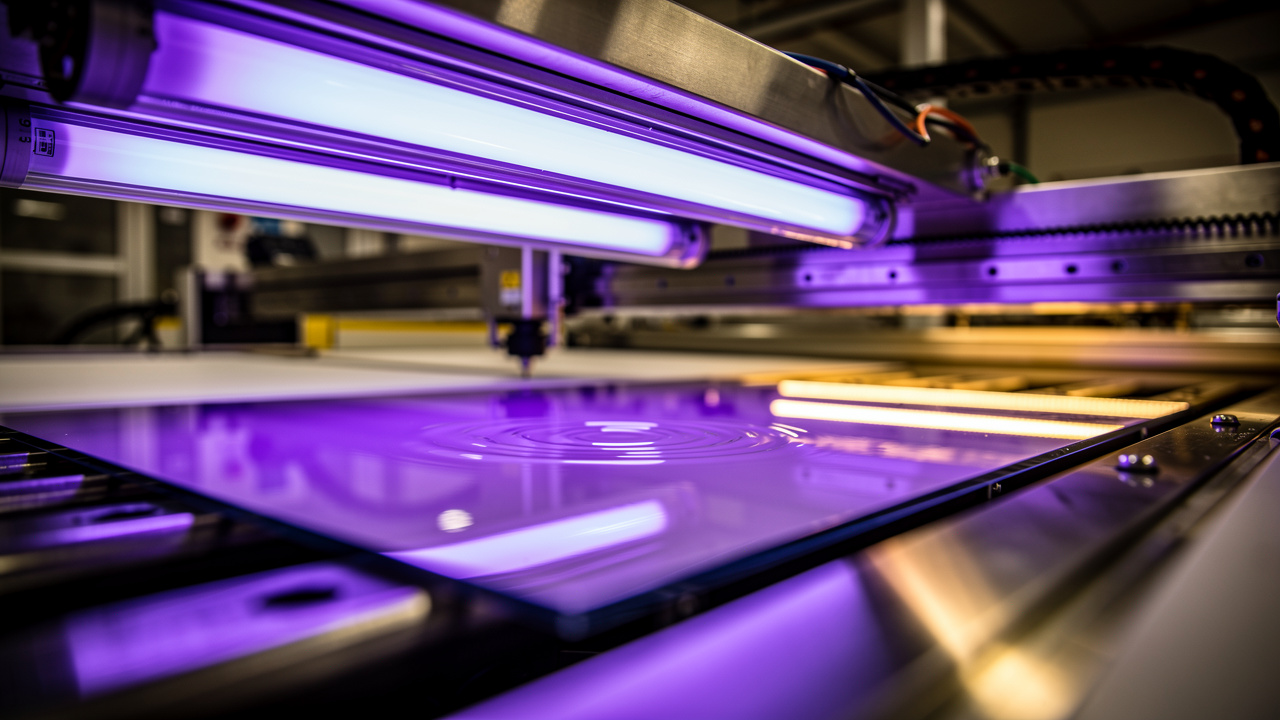
UV printing on glass is a digital process where ultraviolet lamps cure liquid ink directly on glass panels. Artwork prints onto the surface and sets within seconds, giving glass doors and windows permanent graphics without extra films or lamination.
The printer uses UV‑curable inks that contain photoinitiators, and studies such as Factors affecting vacuum ultraviolet emission in UV photoreactors help explain how wavelength and lamp intensity influence photochemical curing reactions. As the print heads lay down tiny dots of ink, UV lamps follow closely and expose the fresh ink to ultraviolet light. That light triggers photopolymerization, where the liquid components link together and turn into a solid, plastic‑like layer bonded to the glass.
Because the ink does not soak into the glass, it stays near the surface. The cured layer holds sharp detail, smooth gradients, and clean text. Research on the Comparison of ultraviolet light-emitting diodes and mercury-arc lamps confirms that LED UV curing can reduce energy use significantly compared with older mercury UV lamps, which helps large print runs stay efficient. Instant curing also means panels can move straight to finishing, packing, or installation.
Traditional glass graphics often use cut vinyl or printed adhesive films. Those rely on glue to stick a separate layer onto the glass, and over time that glue can yellow, bubble, or peel, especially around door handles and exposed corners. Direct‑to‑glass UV printing avoids these weak points because the ink becomes part of the glass surface itself.
The result is a cleaner look and a flatter finish. Designers can specify full‑color images, frosted effects, or solid blocks of color printed directly on clear, tinted, or frosted glass. For interior projects, the low‑odor and low‑VOC profile of many UV inks is another plus, as the US Environmental Protection Agency notes that solvent inks contribute to indoor air pollution.
Why UV Printing Is Ideal for Storefront Glass Doors and Display Windows
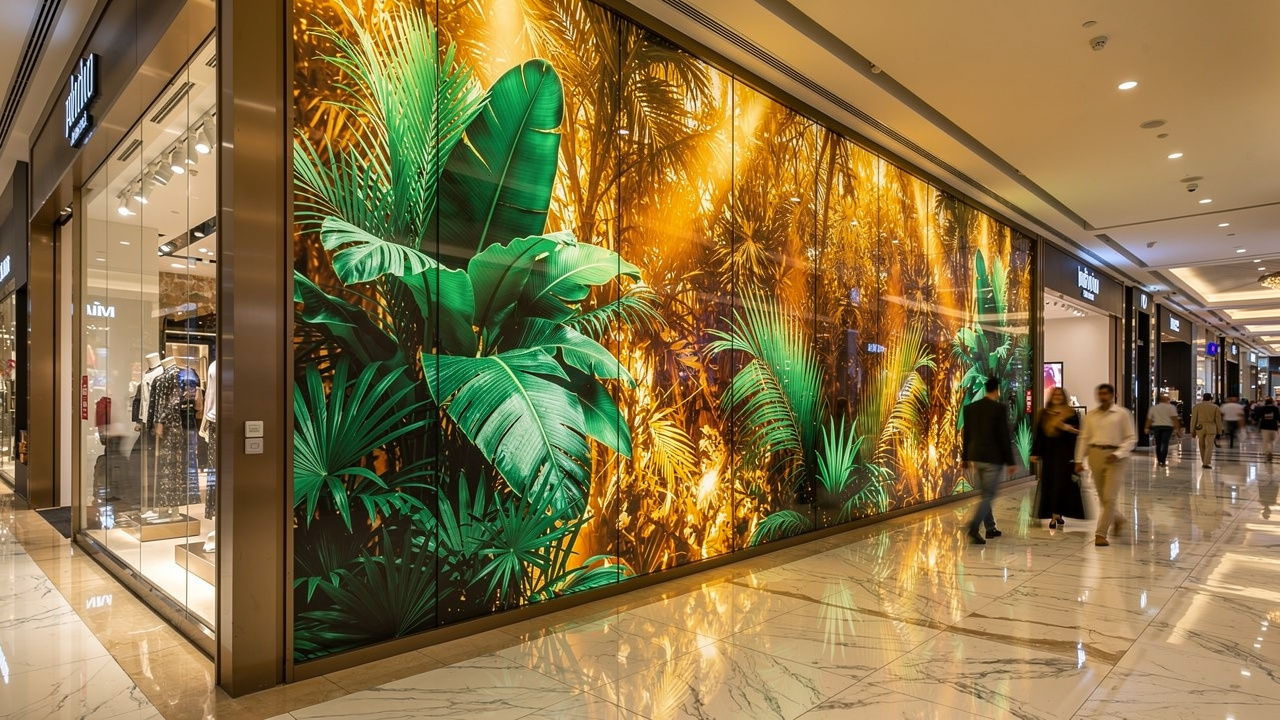
UV printing fits storefront glass doors and display windows because it combines strong visuals, long life, and precise control over brand details. Storefronts printed this way look sharp from the street yet still cope with daily wear and regular cleaning. For Dubai retail and hospitality, that mix matters for both design and return on investment.
Storefront glass sits in one of the toughest spots for any graphic. Sunlight, heat, sand, and frequent cleaning all hit the same surface. The UAE National Center of Meteorology notes that summer daytime temperatures in Dubai often climb above 40 degrees Celsius, which is hard on traditional vinyl. UV‑cured inks tolerate this better than most films, a point reinforced by A critical review of UV light-emitting diode technology, which highlights the superior durability and performance of UV-cured systems in demanding environmental conditions.
Color and clarity sit close behind durability. Modern UV printers deliver very high resolution, so product shots, models, and typography stay crisp even on wide panels. A survey by FedEx Office found that 76 percent of shoppers entered a store they had never visited before because of its signage, which shows how strongly a window display can influence foot traffic.
Key advantages for glass doors and display windows include:
Bright, consistent color
UV printing holds color on the surface instead of letting it sink in. That keeps tones rich, even on dark or tinted glass where white ink can form a solid base. For retail brands in malls like Dubai Mall or Mall of the Emirates, this helps window campaigns stand out in long corridors of competing stores.Durability in harsh conditions
The cured ink layer resists scratching from routine cleaning and contact at door edges. Unlike film edges that can catch and lift, the printed layer has no seam to pull. Over several seasons this cuts service visits and reinstallation costs compared with standard vinyl wraps.Cleaner, low‑odor production
UV inks cure with light rather than solvent evaporation, which means fewer fumes. That matters when glass panels are printed for offices, hotels, and restaurants that care about indoor air quality. Installers also avoid handling soft films with aggressive solvents.Precise brand matching across locations
Retail and hospitality chains often maintain branch networks across Dubai, Abu Dhabi, and the wider GCC. UV printing, paired with color‑managed workflows, lets brand teams repeat the same glass design with steady Pantone and CMYK values, even when timelines are tight.
These advantages help explain why designers now swap long rows of cut vinyl for direct‑printed glass in lobbies, cafés, and flagship stores.
How Waseem Printing Services Handles UV Printing on Glass
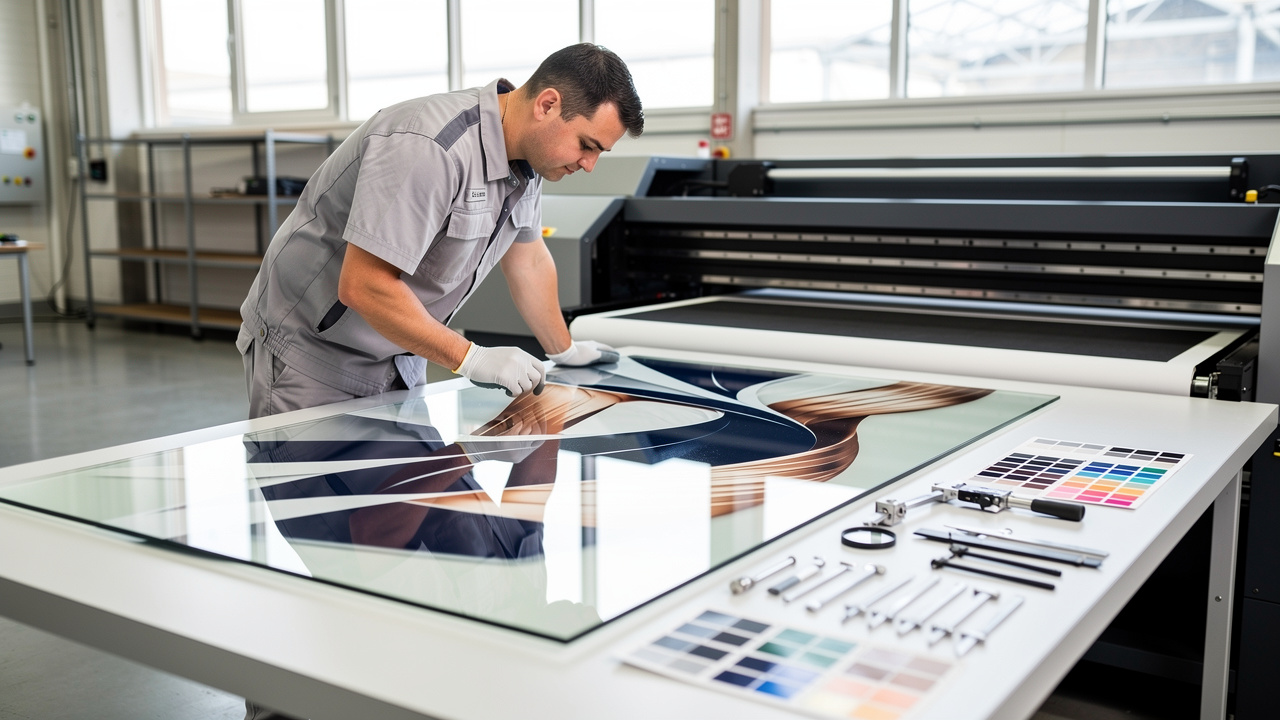
Waseem Printing Services approaches UV printing on glass as a full project, not only a print job. The team starts with design files and site details, then guides the glass from artwork stage to ready‑to‑install panels. Architects, interior designers, and brand managers work with one partner for the full storefront package.
Projects usually begin with a design review. Waseem Printing Services checks resolution, bleed, white‑ink layers, and panel splits against actual glass sizes. For precise brand colors, Pantone or brand‑guideline references feed into a color‑management workflow, which can include test prints on real glass when needed. Studies such as Mining Customer Journeys to uncover empirical retail patterns show that consistent brand presentation across locations directly shapes purchasing behavior, so Waseem Printing Services’ focus on steady color has real business weight.
Next, industrial flatbed printers take over. Flat glass panels rest on the printer bed while print heads move above and lay down layers of UV ink. White ink can back up the design for one‑sided viewing, or a day‑and‑night effect can use color, white, and color again. UV lamps cure each pass so the panel comes off ready for handling. Quality checks look for banding, pinholes, and color shifts before panels move to edge finishing or hardware preparation.
For export work or multi‑site chains, Waseem Printing Services also plans packing and labeling so glass arrives marked for each store bay or door. That helps site contractors and fit‑out teams install quickly without confusion.
“Good design is good business.”
— Thomas Watson Jr, Former CEO at IBM
This idea fits well with printed glass. The front door and window often form the first line of design that a customer meets, and Waseem Printing Services treats them with the same care as any interior feature wall.
What Sets Waseem Printing Services Apart for Glass Projects
Waseem Printing Services stands out on glass projects through a mix of technology, scale, and project support. The company focuses on UV printing for challenging surfaces, so glass storefronts fit naturally into its daily work.
Industrial flatbed UV equipment for direct glass printing
The company uses large industrial flatbed printers that accept full glass sheets. Panels such as doors, display windows, and partitions lie flat, so the ink lands in the right place with steady thickness. This setup avoids seams or panels joined from small printed pieces.Large‑format coverage for full storefronts
Many Dubai and Abu Dhabi storefronts stretch several meters wide. Waseem Printing Services can print on oversized glass sheets that match these spans. Where building rules limit size, the team plans panel breaks so graphics line up neatly once installed.Custom sizing and precise color control
No two projects share the same glass sizes. Waseem Printing Services builds each print file around real dimensions and hardware cutouts. Pantone and CMYK matching keep logos and brand colors steady, even when one project covers branches in different cities.End‑to‑end project workflow
Clients often face tight launch dates for store openings, hotel refurbishments, or trade show pop‑ups. Waseem Printing Services offers a single route from initial artwork through printing, finishing, and delivery. This reduces handoffs, prevents file errors between vendors, and keeps timelines more predictable.
“Design is not just what it looks like and feels like. Design is how it works.”
— Steve Jobs, Co‑founder at Apple
Printed glass that looks good and installs cleanly reflects this idea, and it is the standard Waseem Printing Services aims for on every storefront.
Key Challenges in UV Printing on Glass — and How They’re Solved
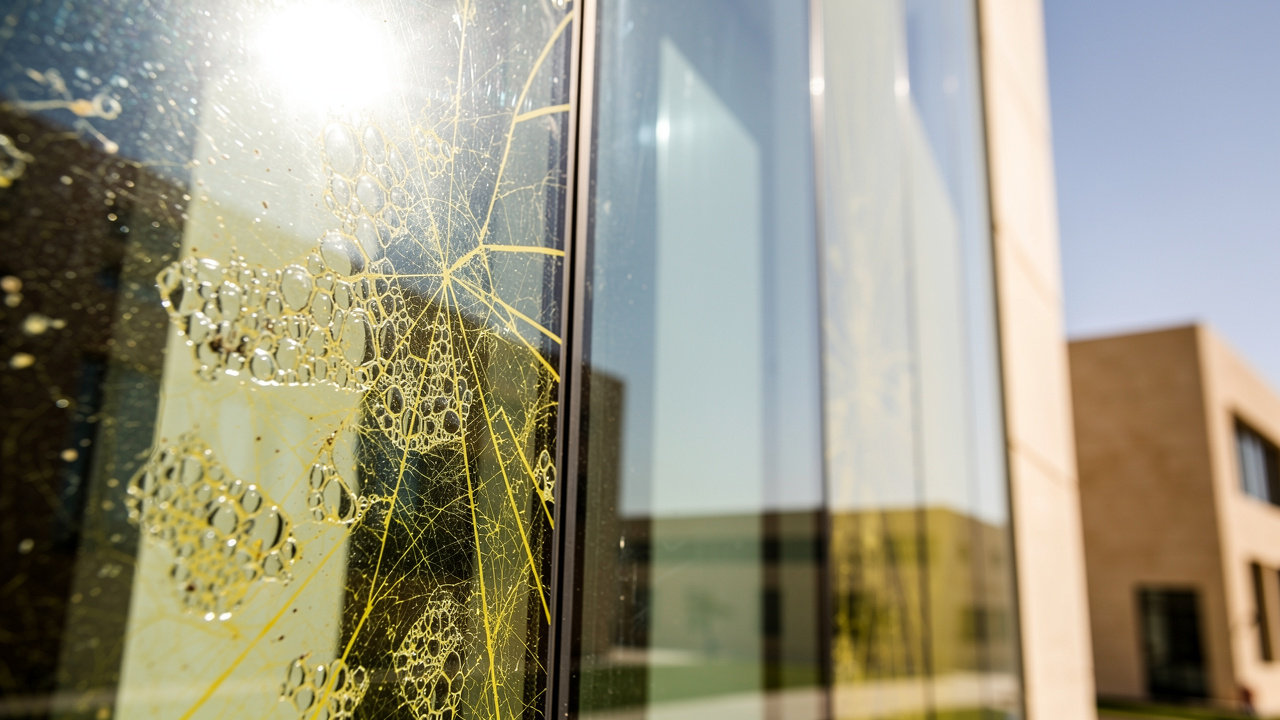
UV printing on glass brings special challenges because glass is smooth, heavy, and often exposed to strong weather. Tackling these points from the start keeps doors and storefronts looking fresh for years instead of months. Waseem Printing Services has built its process around these real project issues.
Glass itself does not absorb ink, so adhesion must come from the ink chemistry and curing process. At the same time, multi‑location brands cannot accept color shifts between branches. Dubai’s heat, sand, and UV also punish anything that sits on an exterior façade. According to FESPA, print providers around the world now favor UV and LED UV systems largely because of this durability and material flexibility.
Common challenges and responses include:
| Challenge | Why It Matters | How It’s Addressed |
|---|---|---|
| Ink adhesion on non‑porous glass | Poor adhesion risks peeling, flaking, and short life | Industrial UV flatbed technology bonds ink using controlled photopolymerization and tested ink sets |
| Brand color consistency across locations | Inconsistent output damages brand perception | Pantone and CMYK color matching, plus test prints and profiles, keep output aligned |
| Durability in Dubai’s harsh climate | Heat, UV radiation, and sandstorms degrade vinyl rapidly | UV‑stable, fade‑resistant inks and inside‑surface printing suit UAE conditions |
| Oversized or custom‑dimension glass panels | Standard printers force tiled graphics that break images | Large‑format UV printing handles custom dimensions with planned panel breaks |
| Multi‑vendor coordination complexity | Miscommunication and delays across design, print, and install | A single‑partner, end‑to‑end workflow removes handoff friction and confusion |
By treating each challenge as part of the planning stage, not a problem to fix later, Waseem Printing Services keeps glass projects on track. The mix of industrial equipment and project management helps architects, designers, and brand managers trust that a design approved on screen will appear correctly on real glass.
That is one reason retail chains, hotels, and corporate offices across Dubai now favor direct UV‑printed glass over traditional film‑based signage. The method suits the climate, respects brand standards, and reduces rework caused by peeling vinyl or mismatched colors.
Tip: Ask for a small test panel on the same glass type used at your site. It gives a realistic preview of adhesion, color, and opacity before committing to a full roll‑out.
The Bottom Line
UV printing on glass doors and storefront displays gives Dubai businesses a way to turn clear surfaces into long‑lasting brand media. Direct‑to‑glass prints hold color, resist weather, and present a cleaner finish than stacked films or stickers. When planned well, they also keep multi‑branch branding steady from mall to mall.
Conclusion
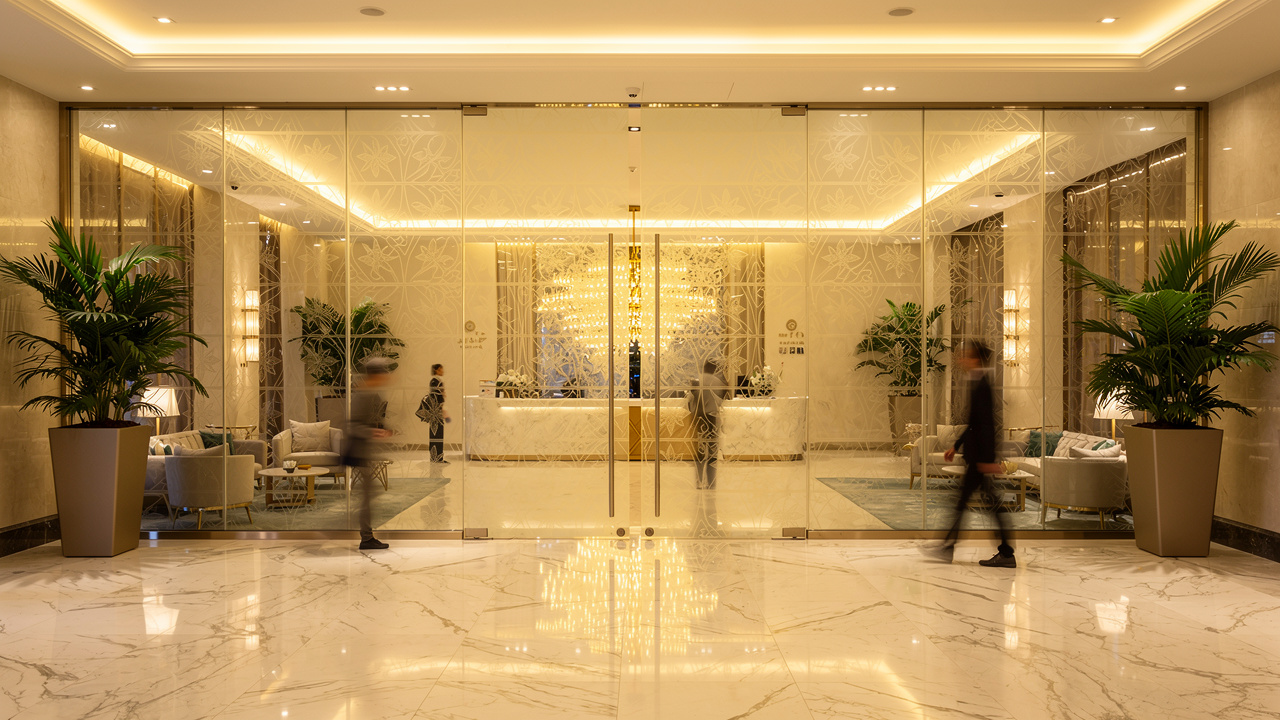
For mid‑sized and large brands, the choice is less about print novelty and more about steady performance. UV printing on glass offers that through strong adhesion, energy‑efficient curing, and reliable color. Waseem Printing Services brings industrial flatbed technology, large‑format handling, and an end‑to‑end workflow that suits fast‑moving retail and hospitality projects.
Retailers, designers, and brand managers who want storefront glass that works as hard as the logo behind it can start by sharing project drawings and artwork with Waseem Printing Services and planning the next glass display together.
Frequently Asked Questions
UV printing answers many glass‑branding questions, yet some points come up often. These short answers give a quick view of what to expect from printed glass storefronts.
Question: Can UV printing be applied to any type of glass surface?
Answer: Yes. Industrial UV flatbed printers work on most flat glass panels used in doors, display windows, partitions, and décor. Clear, frosted, and tinted glass all accept UV inks when cleaned and prepared correctly, so adhesion and durability stay high.
Question: How long does UV‑printed glass last in Dubai’s outdoor conditions?
Answer: UV‑printed glass usually lasts several years in Dubai’s sun when specified correctly. UV‑stable inks, inside‑surface printing, and correct cleaning methods help graphics resist fading and scratching much better than standard vinyl films in the same locations.
Question: Is UV printing on glass more expensive than vinyl wrapping?
Answer: Upfront, UV‑printed glass often costs more than a simple vinyl wrap. Over time, it often costs less, because there is no adhesive layer to fail, prints resist fading longer, and panels do not need frequent removal and replacement during seasonal campaigns.
Question: How quickly can UV‑printed storefront glass be produced and delivered?
Answer: Production is fast because UV inks cure instantly. Timelines depend on glass size, quantity, and finishing, but Waseem Printing Services streamlines artwork checks, printing, and packing so most commercial storefront runs fit typical retail or fit‑out schedules.
Question: Does UV printing on glass require any special file preparation or artwork specifications?
Answer: Yes. Provide artwork at 300 DPI in CMYK color mode with Pantone references for brand colors. Add 3 to 5 millimeters of bleed, and supply separate layers for white ink or special effects. Waseem Printing Services can review files and guide setup before production.