Introduction
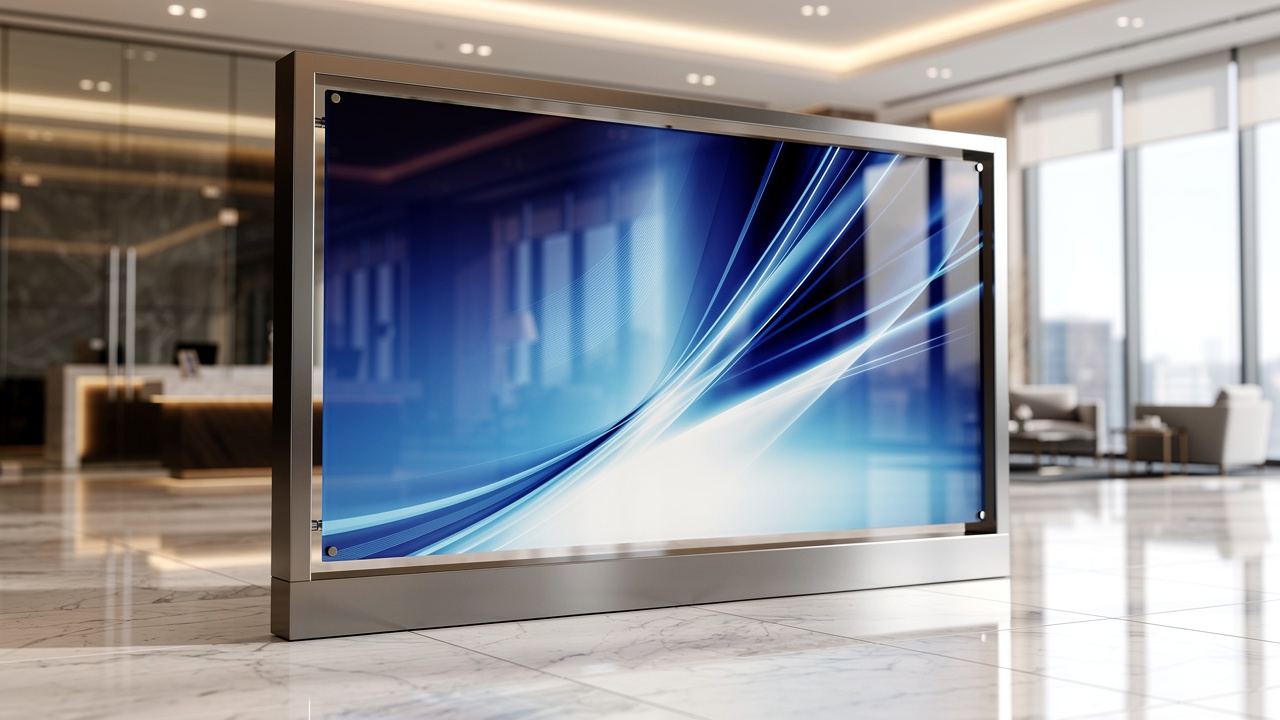
Acrylic displays are a premium part of any branded space, yet many prints start looking tired far too soon.
Fading logos, scratched panels, and peeling vinyl all eat into that investment and pull attention away from the message you want people to see.
UV Printing Improves Durability of Acrylic Displays by curing ink into a hard layer that bonds firmly with the sheet. With industrial UV flatbed equipment, Waseem Printing Services turns acrylic signage and décor into long-running assets for Dubai and the wider UAE. This article breaks down how the process works, where it delivers the most value, how it compares to older methods, and what to expect from a specialist printing partner.
Key Takeaways
UV printing bonds ink into a solid, cross-linked layer that grips tightly to acrylic. This strong adhesion resists peeling and flaking even on smooth, glossy panels. Because UV Printing Improves Durability of Acrylic Displays at the ink level, brands get a longer service life from every panel.
UV-cured inks resist scratching, fading, moisture, and common cleaners used in stores, hotels, and offices. That means acrylic signage keeps its color, sharpness, and gloss even under harsh lighting or heavy daily use. For corporate interior designers and brand managers, this stability protects design intent across complete rollouts.
Waseem Printing Services offers direct UV printing on clear, frosted, colored, and mirrored acrylic panels in custom sizes. The team handles artwork setup, color management, and finishing so commercial clients have one reliable partner from concept to delivery. That integrated workflow keeps projects on schedule and maintains consistent quality across every site and campaign.
What Is UV Printing And Why Does It Work So Well On Acrylic?
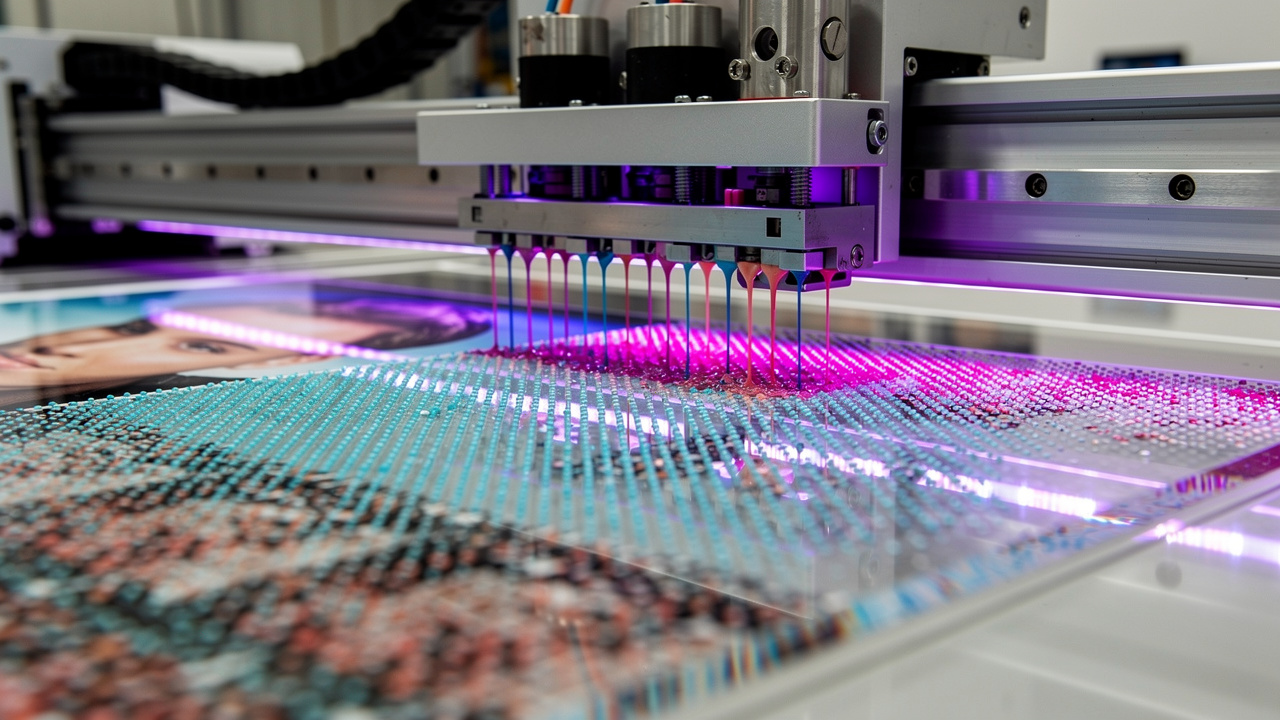
UV printing is a digital process where ultraviolet light instantly cures specially formulated inks directly on rigid materials such as acrylic. Instead of drying by evaporation, the ink molecules link together into a thin, plastic-like film the moment they pass under UV lamps, a photochemical process studied in depth through photorheological analysis of conductive acrylic composites (Photorheological study of conductive). This cured layer sits securely on the sheet and stays stable even when panels are moved, cleaned, or transported.
According to FESPA, UV curing allows printers to reach production speeds and hardness levels that traditional solvent systems rarely match. Because the ink sets instantly, dots stay tight, so logos, small text, and photographic images all print with high resolution. Modern flatbed machines from brands like HP, Canon, and Mimaki can reach 1200 DPI or higher on acrylic while keeping production consistent across large runs.
On a typical UV flatbed press, the sequence looks like this:
The acrylic sheet is laid flat on the vacuum bed.
The print heads deposit CMYK (and often white or clear) inks directly onto the surface.
UV lamps mounted near the heads flash over the fresh ink, curing it instantly.
The panel exits the machine fully dry and ready for cutting, polishing, or mounting.
Acrylic itself is a clear thermoplastic sold under names such as Plexiglas, Perspex, and ACRYLITE. Manufacturers report that high-grade cast acrylic passes up to 92 percent of visible light, which makes printed graphics look bright and sharp even in dim interiors (Acrylite). Because the surface is hard and non-porous, most conventional inks struggle to hold on, while UV Printing Improves Durability of Acrylic Displays by forming a chemical bond with that smooth face.
How UV Printing Improves Durability Of Acrylic Displays Across Four Key Dimensions
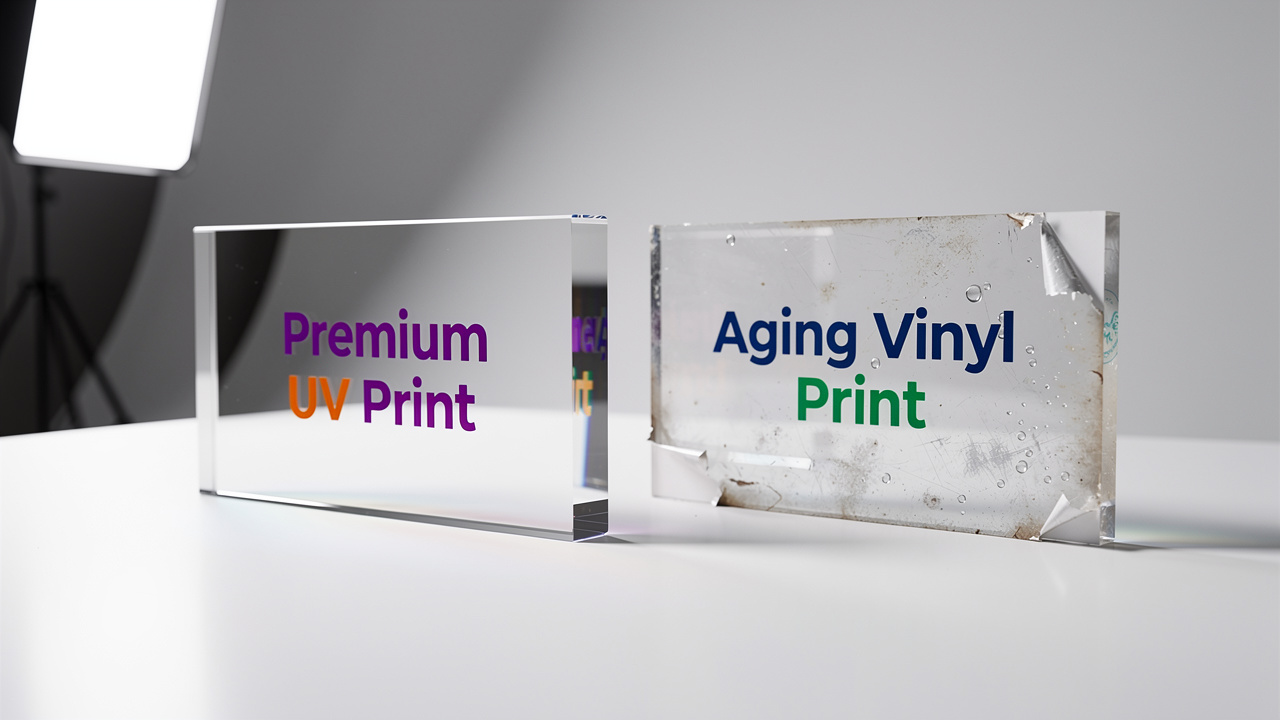
From a performance view, UV Printing Improves Durability of Acrylic Displays across four main areas that matter in busy sites. The cured ink layer resists scratching, keeps color stable under harsh light, blocks moisture, and tolerates everyday cleaning chemicals.
The four durability dimensions can be viewed as:
Scratch and abrasion resistance
Fade resistance
Moisture resistance
Chemical resistance
Scratch and abrasion resistance starts with the hardness of the cured ink film. Testing referenced by FESPA shows UV inks on rigid media surviving thousands of abrasion cycles with only slight gloss change, where many solvent prints show clear wear far sooner. For a busy lobby in Dubai Mall or an open office in Abu Dhabi, that hardness means front desk panels and wayfinding signs stay clean and sharp even when people brush against them all day.
Fade resistance comes from the way UV inks use ultraviolet energy only once, during curing.
“The same UV energy that causes conventional inks to fade is used in UV printing to permanently lock color pigments into a cross-linked polymer matrix.”
— Technical Team, Waseem Printing Services
That stable color is valuable in shopfronts along Sheikh Zayed Road or glass-heavy lobbies in Sharjah, where branding must stay consistent every day — a challenge examined in recent research into the color accuracy of corporate colors in expanded gamut print reproduction (Color Accuracy of Corporate).
Moisture resistance also matters in the Gulf, where coastal humidity in Dubai often exceeds 60 percent on summer days (National Center of Meteorology). Because the cured UV ink layer is non-porous, it does not swell or let water creep behind the graphic. That keeps wayfinding and safety signs readable in kitchens, spas, and car park entrances where condensation is common and air-conditioning cycles on and off.
Chemical resistance closes the loop, since modern hygiene routines rely on alcohol-based sprays and detergents. The cross-linked UV film stands up well to these agents, while many solvent systems soften or smear, a gap highlighted in low VOC guidance from the U.S. Environmental Protection Agency. This stability helps hospitals, restaurants, and schools keep hygiene standards high without sacrificing graphic quality, as the cross-linked UV film withstands the aggressive cleaning agents documented in studies on high-modulus and toughened polyurethane acrylate coating performance (High-modulus and toughened polyurethane).
Here is how the four durability dimensions compare in a quick view.
| Durability Dimension | UV Printing Performance | Traditional Printing Limitation |
|---|---|---|
| Scratch resistance | Hard cured surface resists scuffs from handling and cleaning. | Vinyl edges catch, lift, and mark under repeated contact. |
| Color stability | Pigments stay bright under sun and strong indoor light. | Solvent and latex films fade and shift over shorter periods. |
| Moisture resistance | Non-porous layer blocks humidity and light splashes. | Adhesive films can trap moisture and bubble away from acrylic. |
| Chemical resistance | Tolerates alcohol-based cleaners used in modern facilities. | Many inks soften or smear when wiped with strong products. |
For facility managers, this combination of properties means less frequent reprinting, fewer maintenance visits, and signage that looks close to new even after years of everyday contact.
Where UV-Printed Acrylic Displays Deliver The Most Commercial Value
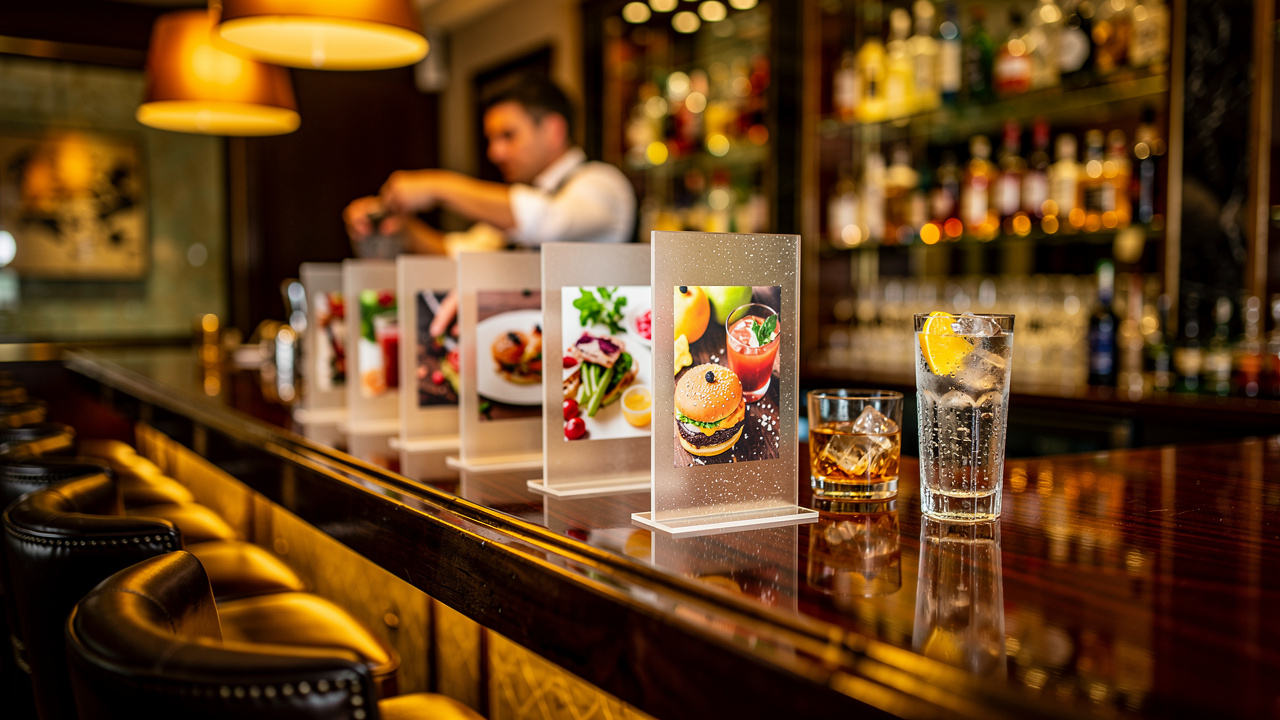
UV-printed acrylic delivers its strongest commercial value where graphics must look premium and survive heavy daily use. That balance suits corporate interiors, retail stores, hotels, restaurants, and exhibition stands across Dubai and the wider GCC.
For corporate interiors, acrylic reception panels, feature walls, and partitions double as brand touchpoints. UV Printing Improves Durability of Acrylic Displays here so logos and photography stay crisp even in high-traffic lobbies. Waseem Printing Services helps interior designers and architects specify panel sizes that match shop drawings from tools like AutoCAD or Revit, reducing surprises during installation.
In retail and hospitality, acrylic is common for window graphics, menu boards, and lightbox faces because it looks refined and handles backlighting well. Research from Nielsen notes that in-store messaging can influence more than half of purchase decisions, so keeping signage sharp has a direct sales effect. UV-printed acrylic also suits exhibition stands at venues such as Dubai World Trade Centre, where panels are assembled, packed, and reused many times.
“Good signage is silent sales staff. When it stays readable and attractive, it keeps working long after the first installation day.”
— Retail Visual Merchandiser, quoted in industry best practices
Common high-value applications include:
Retail point-of-sale displays and trade show panels rely on strong surfaces because staff move and pack them all the time. UV-printed acrylic keeps product images, prices, and messaging sharp even after many resets, assemblies, and shipments. Brands active in malls like Dubai Mall or at events in Dubai World Trade Centre get displays that still look fresh after many uses.
Hospitality menu holders, bar toppers, and table displays face spills, fingerprints, and frequent wiping. The non-porous UV surface resists clouding from alcohol-based cleaners, so text and food photography stay easy to read. Hotel groups and cafés keep a consistent guest experience without constantly replacing worn pieces.
Award plaques and branded merchandise such as desk blocks or coasters often stay on display for many years. UV Printing Improves Durability of Acrylic Displays here by keeping tiny names, dates, and logos crisp despite regular dusting and handling. That finish supports long-term recognition walls in headquarters across the UAE.
Museums, galleries, and showrooms use acrylic for object captions, timelines, and donor walls. The clarity of cast acrylic combined with UV printing makes small text legible and keeps fine details visible under spotlights and changing lighting setups.
UV Printing Vs. Traditional Methods: Which Delivers Better Durability For Acrylic?
Buyers often compare UV printing with screen printing, adhesive vinyl graphics, or solvent-based digital printing when planning acrylic displays. The main difference is that UV inks form a hard film directly on the acrylic, while the other methods rely on separate layers or softer coatings. That construction change explains why UV Printing Improves Durability of Acrylic Displays in day-to-day use.
Screen printing can give thick, opaque color but needs separate screens for each shade and often uses solvent-heavy inks. It works well for simple, flat artwork but becomes slow and complex for full-color images or frequent design changes.
Adhesive vinyl introduces glue lines that can curl, trap dust, and fail under heat or humidity, especially in climates like Dubai. Edges are particularly prone to lifting on corners and curves.
Solvent digital printing generally needs coated layers or specially prepared films to sit between ink and acrylic, adding more components that can fail over time.
According to the U.S. Environmental Protection Agency, UV systems release far fewer volatile organic compounds than many solvent setups, which helps sustainability teams meet air quality goals and corporate environmental policies.
The table below gives a compact comparison for quick decisions.
| Method | Adhesion | Fade Resistance | Chemical Resistance | Environmental Impact | Best For |
|---|---|---|---|---|---|
| UV printing | Strong direct bond | High indoors | High | Low VOC | Long-term signage, premium displays |
| Screen printing | Good on flat art | Medium | Medium | Medium | Simple logos, big runs |
| Adhesive vinyl graphics | Depends on glue | Low at edges | Low at seams | Higher waste | Short campaigns, temporary promos |
| Solvent digital printing | Needs coated layer | Medium outdoors | Low with harsh cleaners | High VOC | Banners, flexible media |
For acrylic-based projects where longevity and a clean finish matter, UV printing tends to give the best mix of durability, detail, and production efficiency.
Why Choose Waseem Printing Services For UV-Printed Acrylic Displays In The UAE?
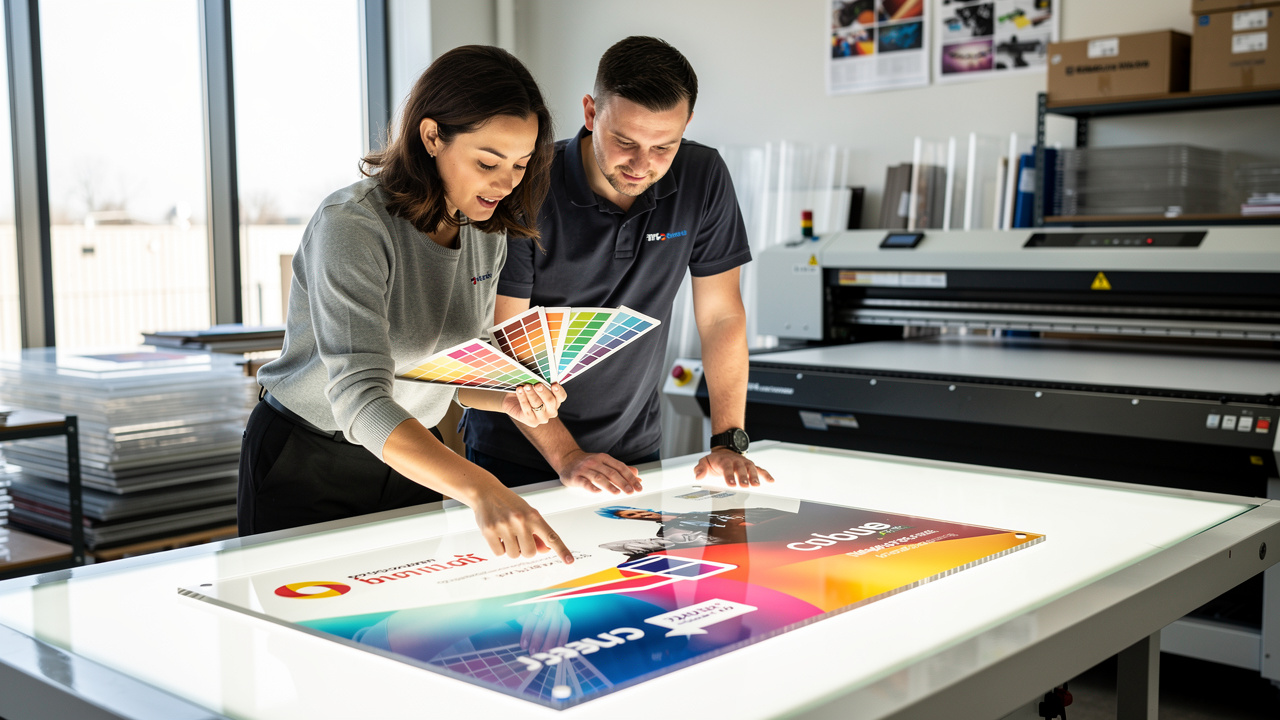
Waseem Printing Services runs industrial UV flatbed printers capable of handling acrylic sheets in many thicknesses and formats, from small plaques to wall-size panels. High-resolution output means UV Printing Improves Durability of Acrylic Displays without sacrificing fine text, Pantone-based palettes, or rich photography across clear, frosted, tinted, or mirrored acrylic. Direct printing also removes extra layers such as vinyl and lamination, which shortens production time and avoids common failure points.
The company offers a full-service workflow for acrylic projects:
Pre-press support, including artwork review, bleed setup, and file optimization
Color proofs and test prints to align with brand guidelines
Precision cutting, drilling, and polishing for clean edges and mounting points
Protective packing and labeling so installers can identify each piece quickly on site
Teams in Dubai, Abu Dhabi, Sharjah, and international hubs can work with one point of contact instead of coordinating several suppliers. This saves coordination time and keeps responsibility clear if anything needs adjustment.
“For acrylic signage and displays, UV printing gives our clients the best mix of durability, color control, and turnaround speed.”
— Production Team, Waseem Printing Services
By focusing on this process every day, Waseem Printing Services helps corporate designers, retailers, and event agencies roll out programs where the graphics match on every wall, counter, and stand. Printed samples and material swatches are available so project teams can review finishes before committing to large orders.
The Bottom Line
The bottom line is simple for commercial acrylic panels: UV technology creates prints that stay cleaner, sharper, and more stable than older methods. The cured ink film resists scratching, fading, moisture, and harsh cleaning, which keeps displays looking close to new for years instead of months.
Conclusion
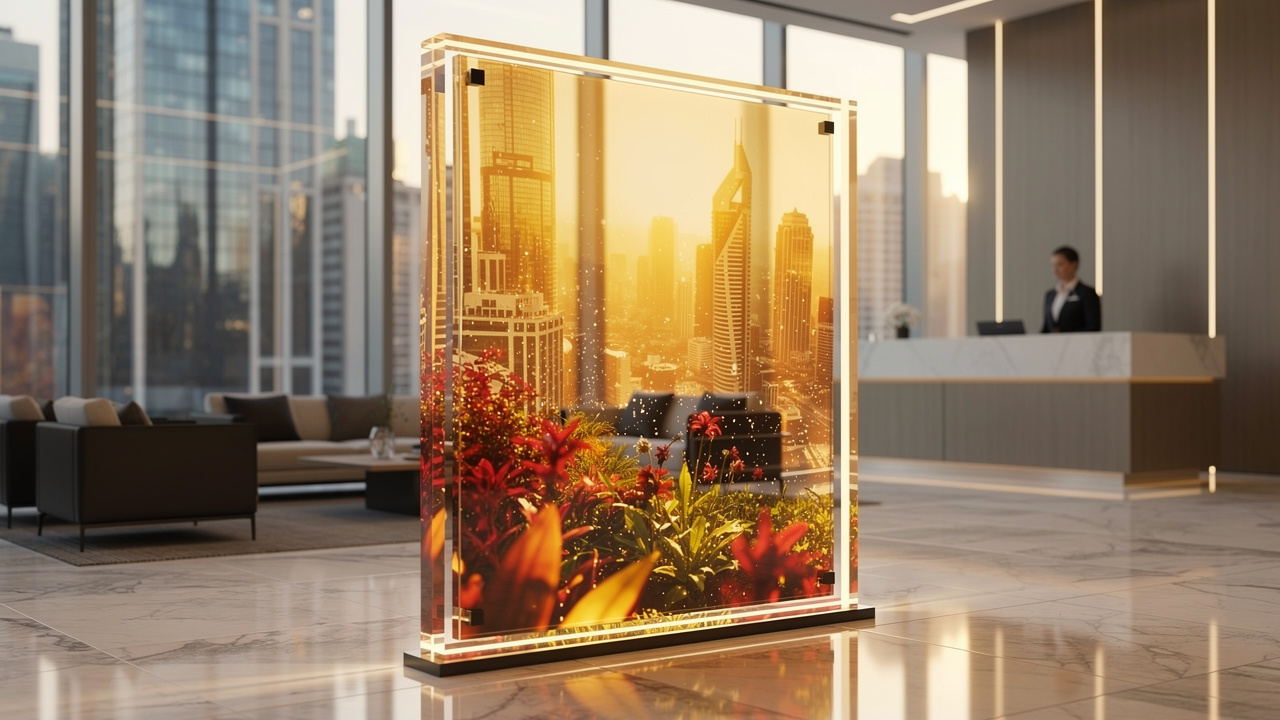
For brands that rely on high-impact signage, UV Printing Improves Durability of Acrylic Displays and lowers the long-term cost of every campaign. Waseem Printing Services combines this technology with careful color control and an end-to-end service model for clients across Dubai, the UAE, and international markets.
To discuss upcoming acrylic signage, interior features, or exhibition panels, reach out to the team and request print samples matched to your brand colors and materials. Seeing real UV-printed acrylic in hand is the fastest way to decide on specifications with confidence.
Frequently Asked Questions
Question: How long do UV-printed acrylic displays typically last in a commercial environment?
Answer: Well-produced UV-printed acrylic displays often stay visually strong for five to seven years in typical indoor use. Because UV Printing Improves Durability of Acrylic Displays, many brands keep pieces in service even longer with gentle cleaning and sensible handling.
Question: Can UV printing be applied to all types of acrylic, including frosted and colored variants?
Answer: Yes, UV equipment prints on clear, frosted, tinted, and mirrored acrylic, as long as the surface is clean and flat. White ink layers can be added where solid color is needed on transparent sheets, for example behind logos or small text that must stand out against glass.
Question: Is UV-printed acrylic suitable for outdoor or high-humidity environments in the UAE?
Answer: UV-printed acrylic works well in covered outdoor and high-humidity locations, including coastal cities like Dubai and Abu Dhabi. The non-porous ink film resists moisture, and the acrylic itself has good resistance to yellowing under sunlight. For fully exposed outdoor installations, many specifiers combine acrylic with additional hardware or shading to get the best long-term performance.
Question: How does UV printing on acrylic compare in cost to vinyl graphic application?
Answer: Upfront, UV printing on acrylic usually costs more than applying printed vinyl, because you pay for direct printing and finishing. Over time, UV Printing Improves Durability of Acrylic Displays, so replacement cycles shrink, which often reduces total program cost. Fewer reprints, fewer installation visits, and fewer damaged panels going to waste can offset the higher initial price.