Article Introduction
Office visitors often face mismatched signs, taped paper printouts, and faded desk plates that weaken brand trust.
This confusion wastes time, frustrates staff, and makes an expensive workspace feel less professional.
Acrylic nameplates and office signage give offices across Dubai and the wider UAE a clean, durable, brand‑consistent way to label rooms, people, and wayfinding. These signs use clear PMMA acrylic and UV printing to deliver sharp color, long life, and a sleek finish. In this guide, Waseem Printing Services outlines material choices, product types, design tips, and a simple path from first brief to final installation.
Keep reading to see how the right acrylic signage plan can tidy every touchpoint in your building.
Key Takeaways
Acrylic has become the main material for premium office signs because it offers glass‑like clarity with much lower weight and break risk. That balance suits high‑traffic corporate, retail, and hospitality interiors across Dubai and Abu Dhabi.
The main families of acrylic nameplates and office signage cover desks, doors, reception walls, directory boards, and wayfinding. Once you understand these groups, it becomes easier to map signage onto floor plans and staff structures.
UV printing directly onto acrylic gives sharper logos and longer‑lasting color than vinyl overlays or basic engraving. Waseem Printing Services uses industrial flatbed UV printers so brand managers get precise color, crisp small text, and strong scratch resistance.
Choosing a UAE‑based signage partner with design support, color management, and multi‑surface printing keeps large projects under control. One experienced supplier can handle acrylic, glass, wood, MDF, and acoustic panels under a single workflow.
Why Acrylic Nameplates Are the Gold Standard for Office Signage
Acrylic nameplates have become the preferred material for office signage because they balance durability, clarity, and design freedom. In corporate towers from DIFC to Business Bay, acrylic signs help brands present a clean, modern image on every floor. The same panels handle daily use, frequent cleaning, and strong indoor light without yellowing.
Acrylic is PMMA, the clear plastic often sold under brands such as Plexiglas and Perspex, and selecting the right sheet grade is essential — see How to Choose Acrylic Sheets for a comprehensive material breakdown. It offers light transmission close to glass yet weighs roughly half as much, which matters when you mount large reception signs on drywall. Compared with wood or PVC, acrylic keeps edges crisp, resists moisture, and accepts precise laser cutting for detailed logos and letterforms.
The print surface is another major advantage. UV inks bond directly to acrylic and cure under ultraviolet light, forming a hard, scratch‑resistant layer — a process optimised by research such as Taguchi’s Method for Optimum cutting of acrylic on CNC laser machines, which informs the precision fabrication techniques used today. That process avoids peeling edges that vinyl overlays often develop in high‑traffic offices. It also supports fine gradients and tiny type, which brand teams at firms like PwC or HSBC need for complex identity systems.
According to the Sign Research Foundation, many businesses report noticeable sales lifts after upgrading their signage, which shows how strongly physical signs influence first impressions. Clear, consistent acrylic nameplates support that same effect inside the office lobby, at the front desk, and outside every meeting room.
The table below gives a quick reference for material selection when planning Acrylic Nameplates and Office Signage for new or refurbished spaces in the UAE.
| Material | Aesthetic | Durability | Customization | Relative Cost |
|---|---|---|---|---|
| Acrylic | Clear, modern, many finishes | High impact resistance indoors | Easy cutting, printing, shaping | Medium |
| Metal | Solid, industrial look | Very high, can dent | Good, harder to shape | High |
| PVC | Plain, utilitarian | Moderate, can scuff | Limited at fine detail | Low |
For corporate interior designers and architects, this mix of visual quality, flexibility, and practicality is why acrylic now underpins many premium office sign programs in Dubai and beyond. Waseem Printing Services builds on this base material with precise UV printing and custom fabrication so each sign fits both brand and building.
What Types of Acrylic Nameplates and Office Signage Are Available?
Acrylic Nameplates and Office Signage cover a wide family of products, from small desk plates to full‑height lobby walls. Understanding these categories helps you plan a complete scheme that feels consistent from reception to back office. Each type has its own ideal size, placement, and mounting hardware.
Here are the core sign types most offices rely on:
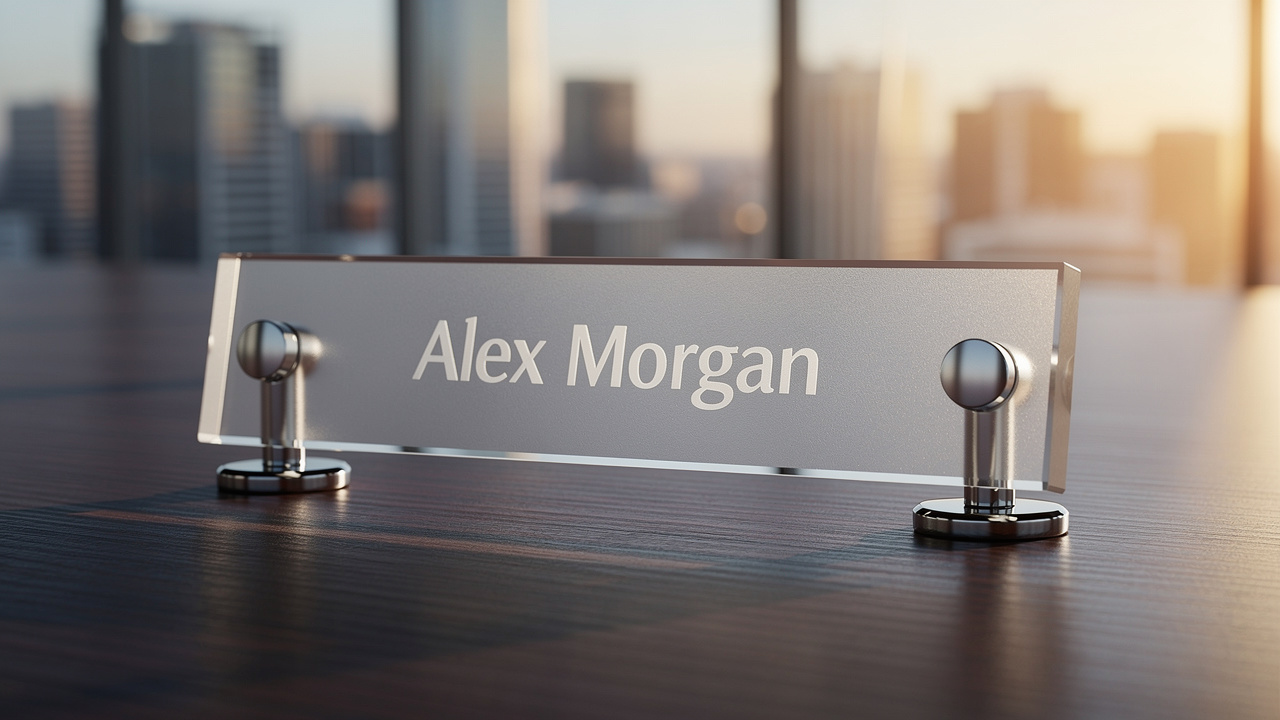
Desk nameplates that sit on reception counters and executive desks. They carry the person’s name, title, and sometimes department, printed or engraved on 4 to 8 millimeter acrylic with a small stand.
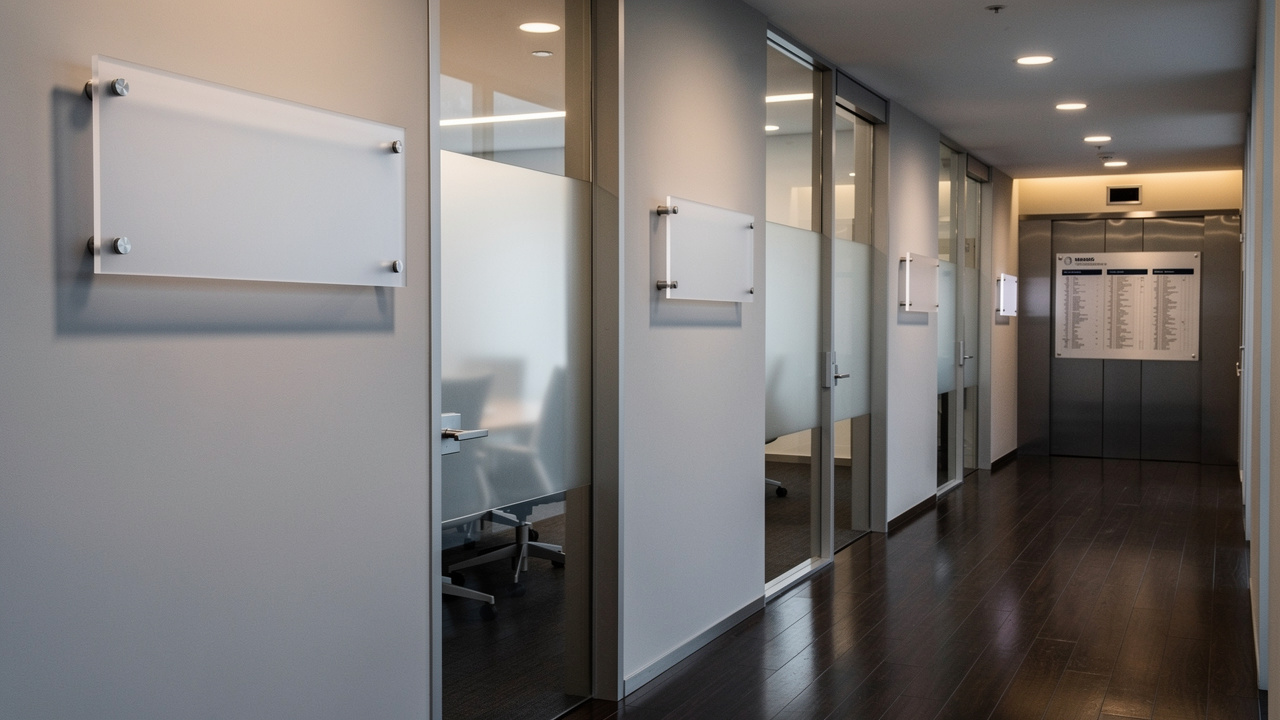
Door and room identification signs mounted beside offices, meeting rooms, and support spaces, often with room numbers or icons that match building wayfinding.
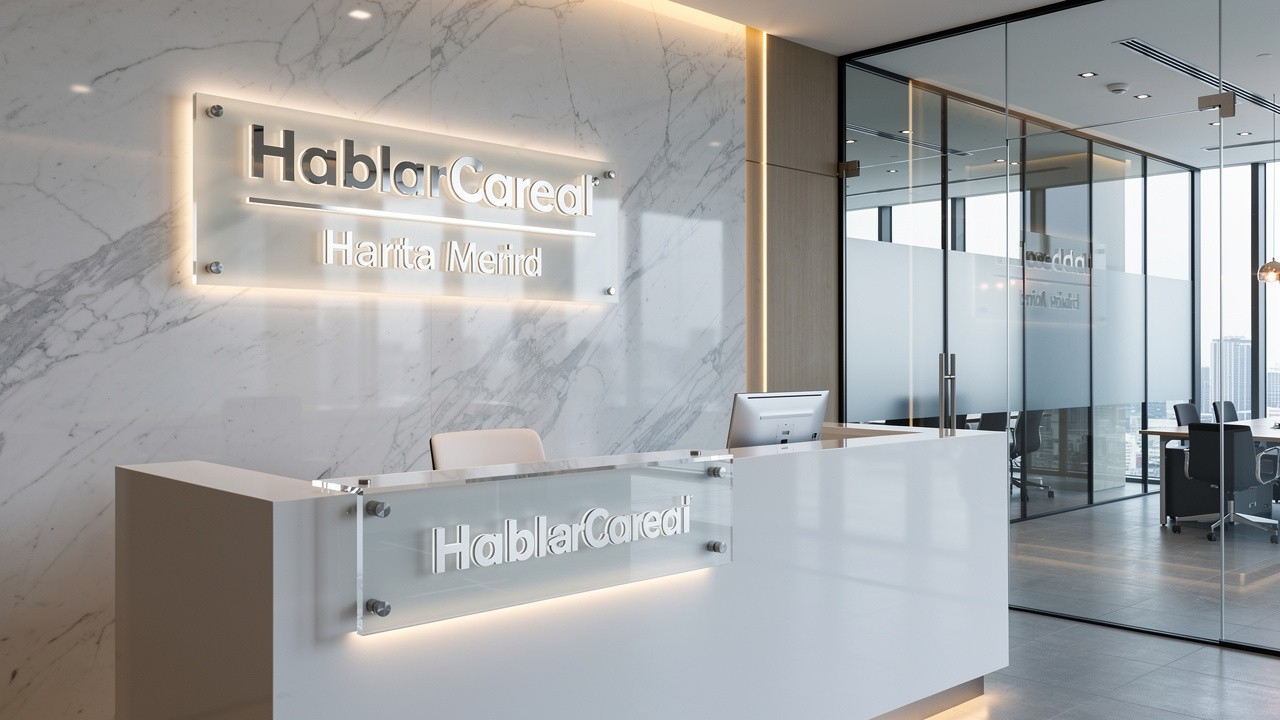
Reception and lobby panels that create the main brand statement in the space. These signs can combine clear acrylic, dimensional lettering, and LED lighting to place a logo behind the front desk.
Directory boards positioned near lifts and main entrances to list tenants or departments, which is especially helpful in multi‑tenant towers across Dubai Internet City and Dubai Media City.
To make selection easier, the table below groups common acrylic signage products by use and environment.
| Product Type | Primary Use | Recommended Environment |
|---|---|---|
| Desk nameplate | Identify staff or counters | Corporate offices, hotels, clinics |
| Door or room sign | Label offices and meeting rooms | Corporate, education, healthcare |
| Reception wall panel | Main logo feature | Headquarters, hotels, banks |
| Directory or wayfinding panel | Guide visitors through floors | Office towers, malls, campuses |
Newer formats extend acrylic beyond flat walls. Partition‑mounted cubicle signs clip onto workstation dividers in open offices so teams and zones stay easy to read. Acoustic panel integrated signage combines printed acrylic plates with sound‑absorbing panels from brands like Knauf or Rockfon, letting you manage both noise and branding on the same surface. Large‑format lobby installations can mix acrylic with glass, timber veneers, or LED walls for dramatic entrances at venues such as Dubai World Trade Centre or ADNEC.
According to a survey by FedEx Office, nearly eight in ten consumers said they entered a store based on attractive signage. That same principle applies inside offices and hotels, where clear, well‑made acrylic signs draw visitors to the right counter or meeting room without confusion. Waseem Printing Services supports this full product range across acrylic, glass, MDF, and more, so one partner can cover the entire building.
How to Choose the Right Finish, Size, and Mounting Method for Your Signage
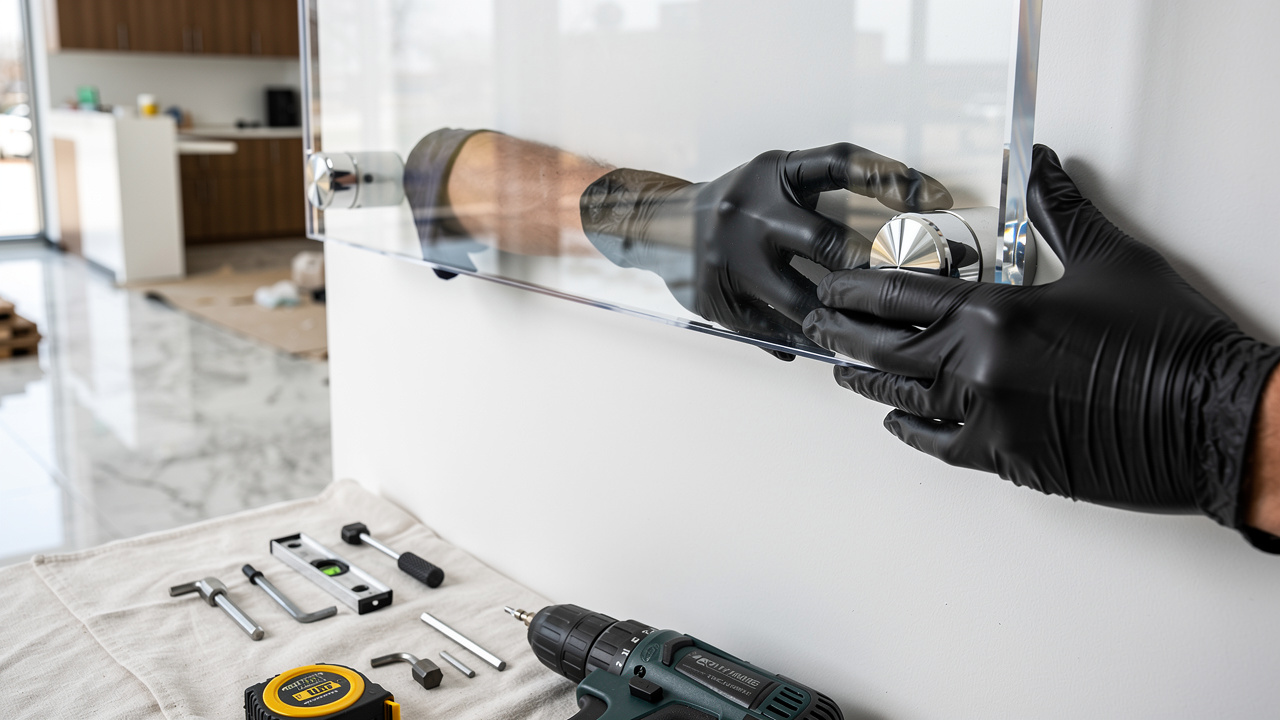
Choosing finishes, sizes, and mounting methods for Acrylic Nameplates and Office Signage starts with how the space should feel and how far away people stand when reading — a process made clearer by the Dubai Acrylic Solutions Guide: Fabrication, Signage, Displays, and Custom Product Pages, which covers regional best practices for acrylic specification. Finish affects mood, size affects legibility, and mounting affects both safety and maintenance. When these choices align, the whole sign system feels natural to staff and visitors.
Clear gloss acrylic suits bright, modern offices where clients expect a tech‑forward feel, such as hubs in Dubai Silicon Oasis. Frosted or matte panels soften reflections and work well in meeting corridors, clinics, and co‑working spaces where glare could distract. Mirror acrylic and deep tinted colors suit high‑impact reception zones in hospitality and luxury retail, while solid white or black panels match minimal corporate schemes.
Different mounting methods fit different walls and sign weights. Before you brief any signage partner, it helps to know how each option behaves in real projects.
Standoff mounts use metal cylinders between the wall and the acrylic panel, creating a slight shadow and a sense of depth. They suit reception logos, directory boards, and larger door signs on solid walls such as concrete or blockwork. Installers drill through the panel and wall, then fix the caps from the front so maintenance teams can remove panels for future updates.
VHB tape or clear silicone adhesive works well for small nameplates and regulatory signs on smooth surfaces. This approach avoids drilling, which matters for glass partitions, high‑grade joinery, or gypsum walls with hidden services. Installers clean both surfaces carefully, then apply the sign so it bonds evenly and resists casual knocks.
Suspended wire systems hold acrylic panels from ceiling cables, keeping signs visible over open reception zones or shopping aisles. They suit wayfinding where wall space is limited or where people need to read the message from a distance in crowded areas. Panels can remain flat or layered, and installers can adjust height later if furniture layouts change.
Size is about more than aesthetics. The Sign Research Foundation notes that letter height and viewing distance strongly affect how quickly people read signs. As a simple rule, 25 millimeters of letter height supports reading from about seven meters, so corridor directional panels need larger text than close‑range desk plates. Waseem Printing Services helps design teams choose sizes and mounts that match each floor plate and wall substrate, from glass fronts to fabric‑covered acoustic panels.
“If people have to slow down or squint, the sign is too small for that corridor.” – Waseem Printing Services design team
Matching Finishes to Brand Identity and Interior Design Style
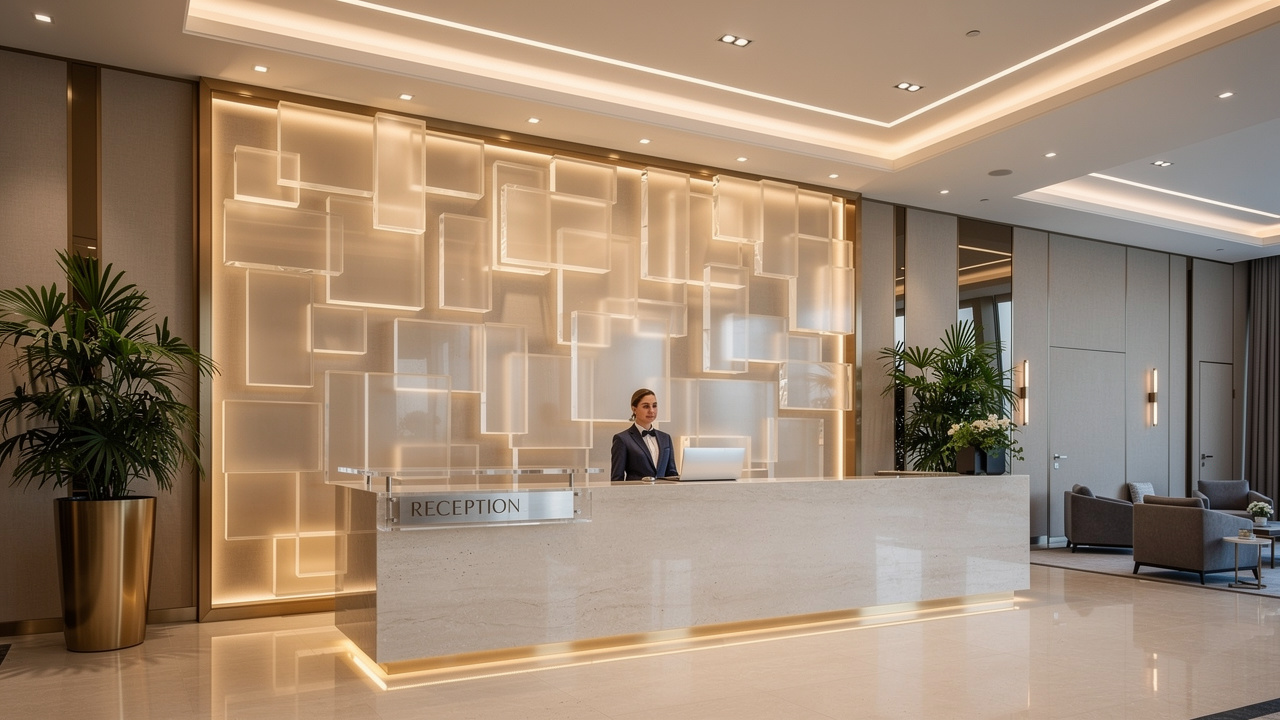
Matching acrylic finishes to brand identity and interior design style turns signage into a true part of the space rather than an afterthought. A finish should echo the logo colors, typography, and materials already used in reception desks, flooring, and furniture. That way, every sign feels like it belongs.
Matte white or frosted acrylic with dark lettering suits minimalist corporate offices with light floors and simple joinery. Mirror metallic finishes and deep tinted panels suit luxury hospitality brands along Sheikh Zayed Road that favor rich brass, marble, and darker palettes. Gloss black acrylic with bright logos fits modern retail and entertainment venues in areas like City Walk or Yas Mall.
Brand consistency matters financially too. Research from Lucidpress found that consistent brand presentation can lift revenue by more than twenty percent, and studies such as Daya Tarik Estetika dan Ketahanan dalam Desain Produk Akrilik further confirm that aesthetic appeal and durability are primary drivers of perceived value in acrylic product design. Waseem Printing Services supports that consistency with Pantone‑accurate color matching and controlled UV printing on acrylic, glass, wood, leather, and acoustic panels so every surface looks aligned.
How Waseem Printing Services Delivers Custom Acrylic Signage From Design to Delivery
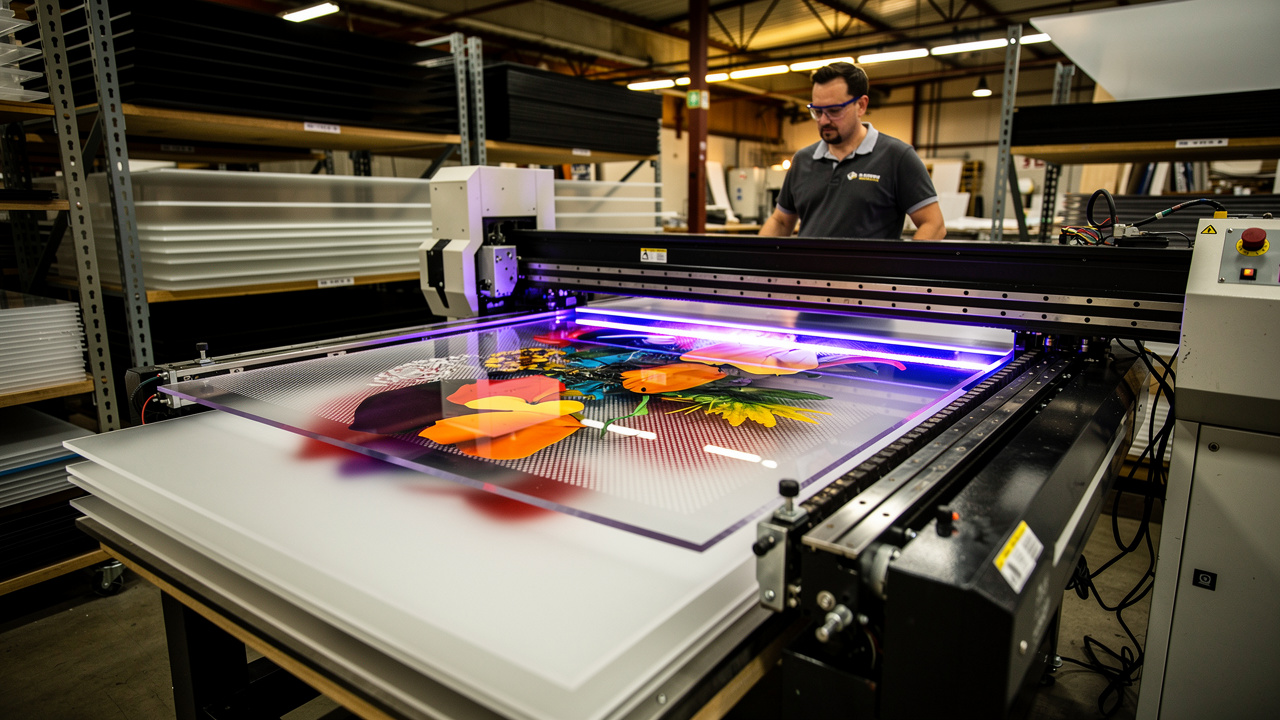
Waseem Printing Services delivers Acrylic Nameplates and Office Signage through a single, structured workflow from first idea to final handover — an approach aligned with emerging digital tools documented in research on the Acrylic Sales Application for mica-based shops, which highlights how streamlined ordering and management systems improve the acrylic supply chain. The company focuses on UV flatbed printing and specialty materials so corporate clients do not need several vendors for different surfaces. That focus saves time and keeps quality steady across entire fit‑outs.
At the heart of Waseem Printing Services are industrial UV flatbed printers from manufacturers such as EFI and Mimaki. These machines print directly onto acrylic, glass, MDF, wood, leather, and acoustic panels up to large sheet sizes. UV‑cured inks form a hardened surface that resists scratches, cleaning chemicals, and indoor sunlight, which suits high‑traffic spaces like banks, clinics, and government service centers.
The team follows a clear project path that makes life easier for interior designers, architects, and brand managers.
Consultation and design support start with drawings, mood boards, and brand guidelines from clients or agencies such as Landor or Interbrand. Waseem Printing Services reviews finishes, thicknesses, mounting options, and bilingual layout needs so the signage package matches both brand and building codes in the UAE. Sample prints and material swatches help decision makers sign off with confidence.
Production covers file preparation, color management, UV printing, cutting, and finishing. Technicians use vector logos and high‑resolution artwork prepared in software such as Adobe Illustrator, then print test panels to check Pantone matches. CNC cutting or laser cutting shapes the acrylic, while edge polishing and cleaning prepare each piece for packing.
Delivery and installation support close the loop for projects in Dubai and other Emirates. For local sites, Waseem Printing Services can coordinate with main contractors and facility teams to schedule installations around other trades. For regional and international projects, careful packing and labeling keep sign sets organized by floor and zone.
“From a single executive desk plate to a complete bilingual wayfinding system, our goal is one joined‑up visual story across every surface.” – Waseem Printing Services team
For clients handling large office fit‑outs or hotel launches, this integrated approach reduces coordination effort. A brand manager can brief one specialist on acrylic reception panels, glass meeting room graphics, MDF directory boards, and acoustic wall branding, rather than chasing several different suppliers. Waseem Printing Services keeps all these elements aligned so the finished interior feels calm, consistent, and ready for visitors on opening day.
The Bottom Line
Acrylic Nameplates and Office Signage give UAE workplaces a practical way to combine clear communication with strong branding. When you pair quality acrylic with UV printing and careful design, signs stay sharp, legible, and on brand for many years. That consistency supports both visitor experience and staff productivity.
Conclusion
For corporate interior designers, architects, and brand managers, acrylic now sits at the center of many office and hospitality sign programs. The material offers the clarity of glass, the workability of plastic, and the design range needed for bilingual, multi‑site brands. UV‑printed graphics protect logos and fonts from cleaning, fingerprints, and indoor light, which keeps reception walls and door plates looking fresh long after handover.
Waseem Printing Services brings all of this together with industrial flatbed printing, precise color control, and the ability to print on acrylic, glass, wood, leather, and acoustic panels. If you are planning new signage or refreshing an existing space, a short brief with their team can turn scattered sign needs into one coordinated plan for your building.
Frequently Asked Questions
Question: What is the difference between cast and extruded acrylic for office nameplates?
Cast acrylic uses liquid acrylic poured into molds, which gives higher clarity, better scratch resistance, and cleaner laser‑cut edges. Extruded acrylic is pushed through dies, costs less, and suits standard office signage where premium optics are less important. For high‑end UAE corporate interiors, cast acrylic is usually the first choice.
Question: How long do UV‑printed acrylic nameplates last in a high‑traffic office environment?
UV‑printed acrylic nameplates usually last many years under indoor conditions without fading or peeling. UV inks cure into a hard layer on the acrylic surface, so they resist daily cleaning and casual bumps. With normal care, signs in meeting corridors and receptions can stay presentable for a decade or more.
Question: Can acrylic signage incorporate both English and Arabic text?
Yes, acrylic signage easily supports both English and Arabic, which is standard practice in UAE offices and public spaces. UV printing handles fine details in Arabic scripts at small sizes while keeping Latin characters crisp. Good layout balances both languages so each remains clear from the intended viewing distance.
Question: Does Waseem Printing Services handle large‑scale office fit‑out signage programs?
Yes, Waseem Printing Services regularly supports large office fit‑outs and multi‑floor signage schemes. Its industrial flatbed printers, multi‑material capability, and structured design‑to‑delivery workflow are built for high‑volume orders. The company serves clients in Dubai and other regions within agreed project timelines.
Question: What information should I provide when requesting a custom acrylic signage quote?
For a precise quote, share your vector logo files, brand guidelines, and a list of required sign types and quantities. Add preferred finishes, approximate dimensions, wall or partition materials, and any bilingual or accessibility needs. A target installation date helps Waseem Printing Services schedule production and delivery around your wider fit‑out program.