Introduction
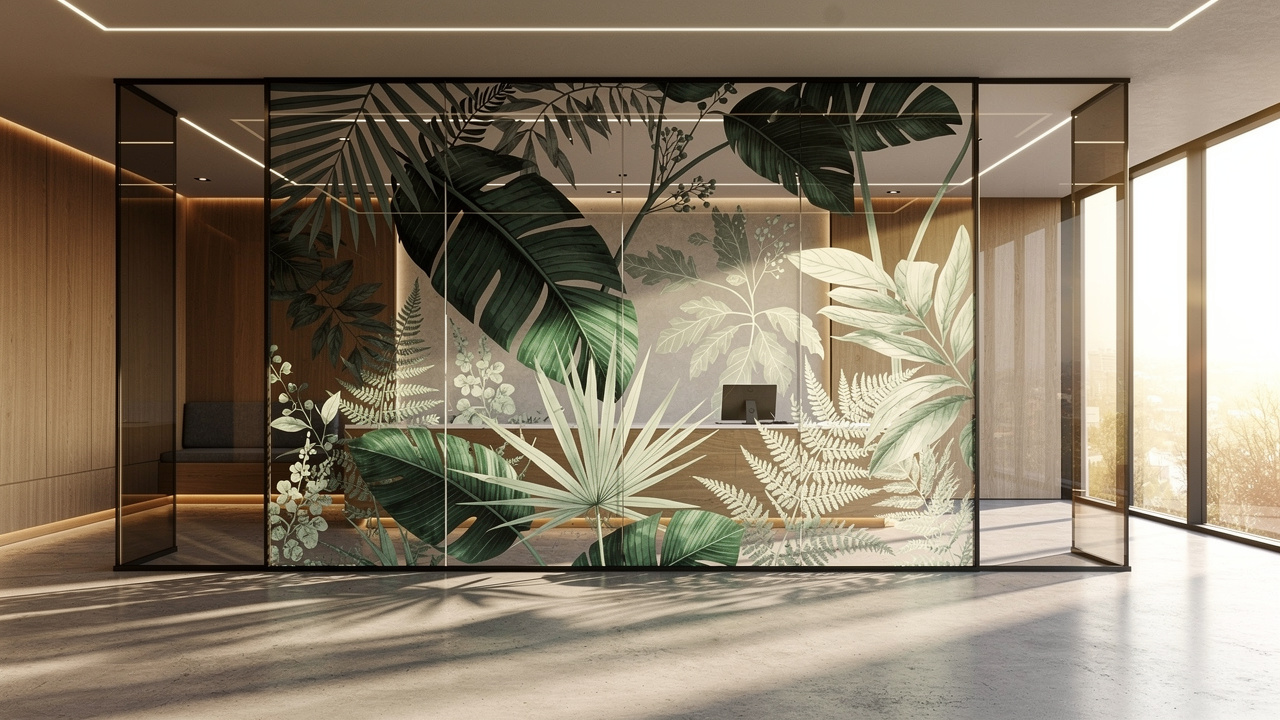
Trends in Decorative Glass UV Printing for 2026 now drive high‑impact interior projects. Plain glazing rarely meets brand, wellness, or acoustic goals on its own. Clients expect walls, doors, and screens to act as clear brand media, not just passive dividers.
Decorative glass UV printing cures ink instantly with ultraviolet light on the glass surface. The result brings sharp detail, accurate color, and a hard‑wearing finish. These traits sit behind many trends in Decorative Glass UV Printing for 2026 across offices and public spaces.
This guide from Waseem Printing Services explains how those trends shape real projects. You will see current moves in aesthetics, print technique, and sustainability. Use them as a quick checklist when you plan your next office, hotel, shop, or exhibition stand in the UAE and beyond.
Key Takeaways
UV printed glass has moved from niche detail. Trends in Decorative Glass UV Printing for 2026 now touch offices, retail, and hospitality. Design teams often treat it as a standard finish rather than a special extra.
Biophilic graphics bring leaves, stone, and water onto glass surfaces. Logos and typography print directly on partitions and fronts. Spaces feel calm, yet branded and consistent.
Multi‑layer passes build tactile textures similar to etching. White ink adds privacy bands and solid color fields. Designers shape light, touch, and views on glass.
Specifiers now ask for cleaner, lower VOC printing. UV inks produce almost no solvent smell during production. Long‑lasting graphics support LEED, Estidama, and many green goals.
What Is Driving the Rise of Decorative Glass UV Printing in 2026?
The rise of decorative glass UV printing in 2026 comes from better technology, changing client expectations, and a strong UAE construction market. Trends in Decorative Glass UV Printing for 2026 center on high image quality, short lead times, and flexible graphics. Instead of choosing between function and appearance, project teams now gain both in a single printed pane.
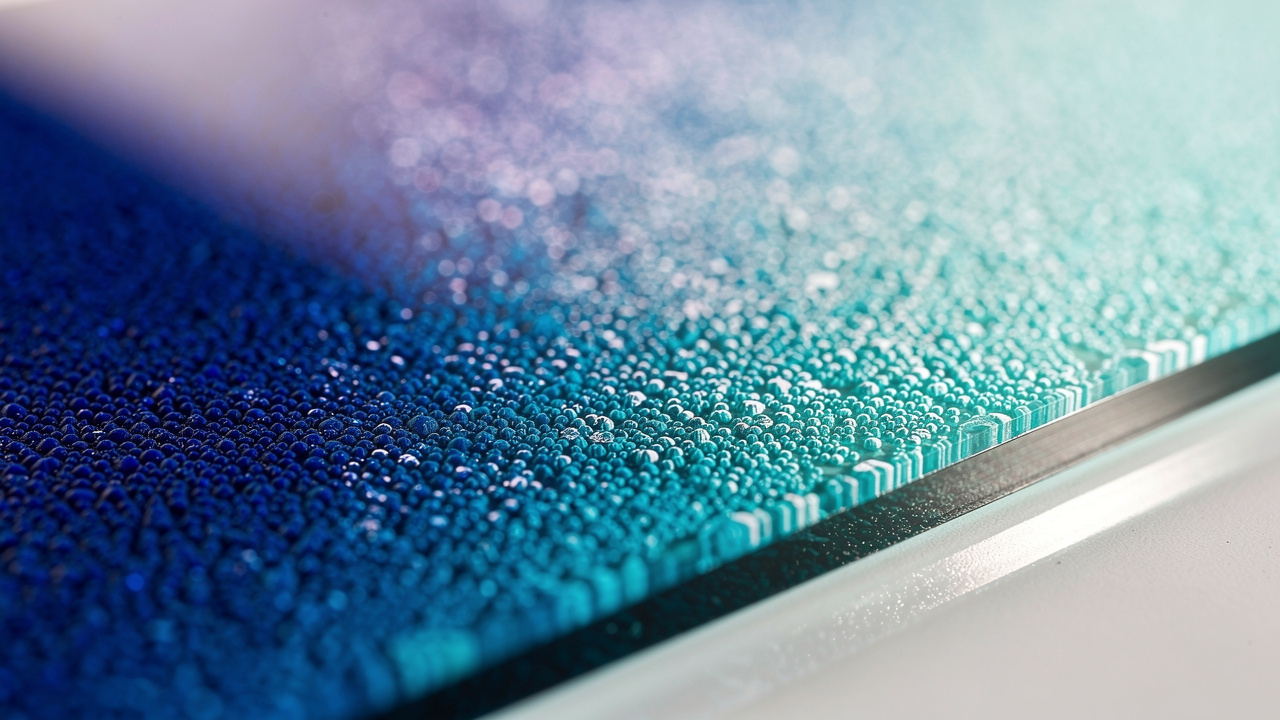
UV printers jet tiny drops of ink onto the glass, then cure them instantly with ultraviolet light. The cured ink forms a thin, tough layer that resists scratches, sunlight, and cleaning chemicals. Compared with etching, sandblasting, or applied vinyl, this process keeps fine gradients, small text, and photo‑level detail, as explored in recent work on Multi-material glass additive manufacturing covering materials, techniques, and integration challenges. Research from FESPA notes that UV curing is one of the fastest growing technologies in wide‑format print, which matches what many designers now request on glass.
Dubai, Abu Dhabi, and Sharjah continue to add Grade A offices, malls, hotels, and cultural venues at speed. According to the World Green Building Council, clients in growth regions place rising value on interior quality, wellness, and environmental impact, not just floor area. For UAE developers, these trends in Decorative Glass UV Printing for 2026 align well with that shift, since printed glass can support privacy, wayfinding, and brand presence at the same time.
For specifiers, the comparison between UV printed glass and older decoration techniques looks clear.
| Method | Visual Detail | Durability | Design Flexibility |
|---|---|---|---|
| UV printed glass | Photo quality color and gradients | Hard surface resists wear and cleaning | Easy to update artwork and run short series |
| Etching or sandblasting | Single frosted style | Very durable but fixed | Limited patterns, no photos |
| Vinyl on glass | Solid colors and simple prints | Can peel or fade over time | Removable but seams and edges stay visible |
“Start by deciding what each glass panel should do—carry graphics, give privacy, soften light, or combine all three—and then choose the print method around that goal.”
— Design tip from the team at Waseem Printing Services
Biophilic Design and Hyper-Personalized Branding The Defining Aesthetic Trends
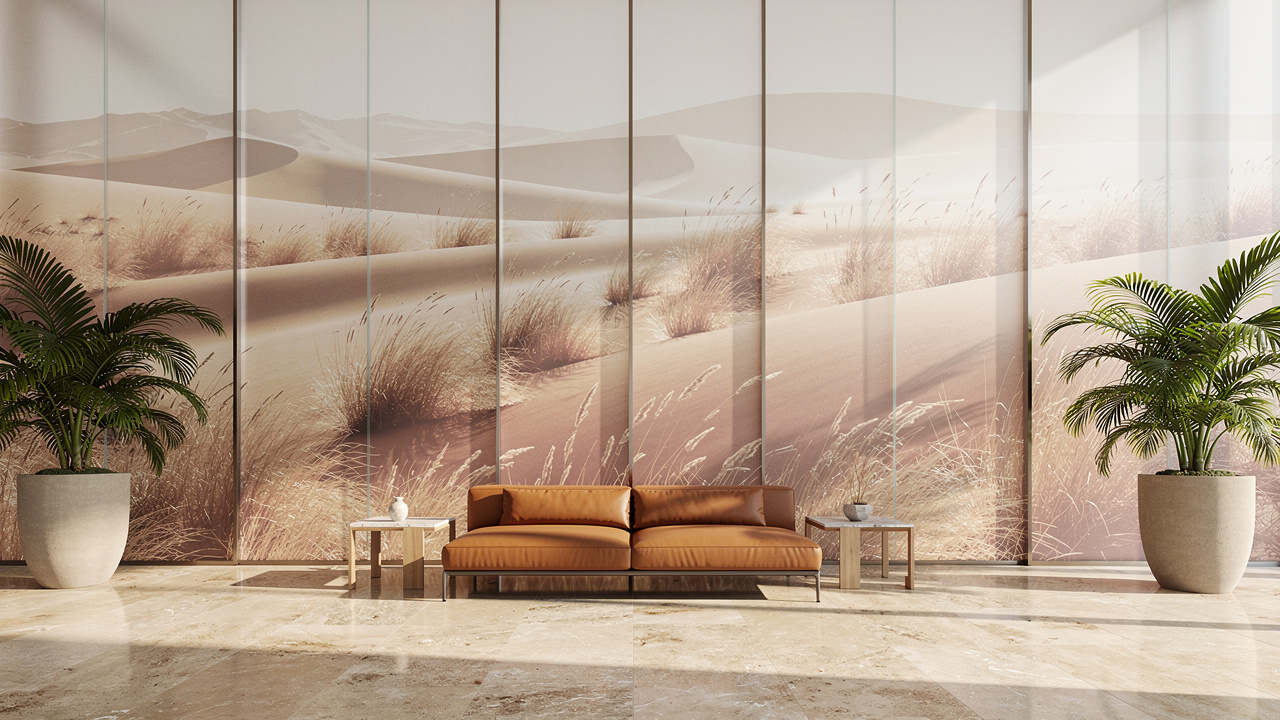
Biophilic design and hyper‑personalized branding now guide how many teams apply trends in Decorative Glass UV Printing for 2026. Together they turn simple glazing into a surface for wellness, wayfinding, and clear brand stories. Both directions are especially strong in the UAE, where deep floor plates and long working hours make visual comfort a priority.
Biophilic glass graphics show forests, desert dunes, plant silhouettes, stone textures, or water ripples in high resolution. Research highlighted by the International WELL Building Institute links visual access to nature with lower stress, better mood, and higher perceived productivity. Printed glass partitions, lift lobbies, and meeting fronts let you bring those cues deep into the plan without adding live planting everywhere. Designers often pair these panels with warm lighting and natural materials such as wood or acoustic felt for a complete scheme. Soft gradients and semi‑transparent layers can echo shadows in real foliage while still allowing daylight to pass through shared spaces.
On the branding side, UV printing gives marketing teams the control they expect from other media. Logos, custom icons, corporate photography, and Pantone‑matched colors can sit directly on reception desks, glass corridors, display cases, or cash wraps. Because files feed straight from digital artwork, brand managers can adjust campaigns or wording without replacing the glass. This suits seasonal retail windows in Dubai Mall, regular bank branch refreshes, or hospitality chains that want consistent graphics from Abu Dhabi to overseas sites.
Waseem Printing Services supports this style of work with precise color management and file handling that keeps every glass panel aligned with brand guidelines. By printing not only on glass but also on acrylic, wood, and acoustic panels, the same visual language can run across surfaces throughout a project. That multi‑surface approach helps corporate interior designers and architects present one joined‑up story from entrance signage to quiet focus rooms.
How Are Tactile Finishes and White Ink Layering Expanding Design Possibilities?
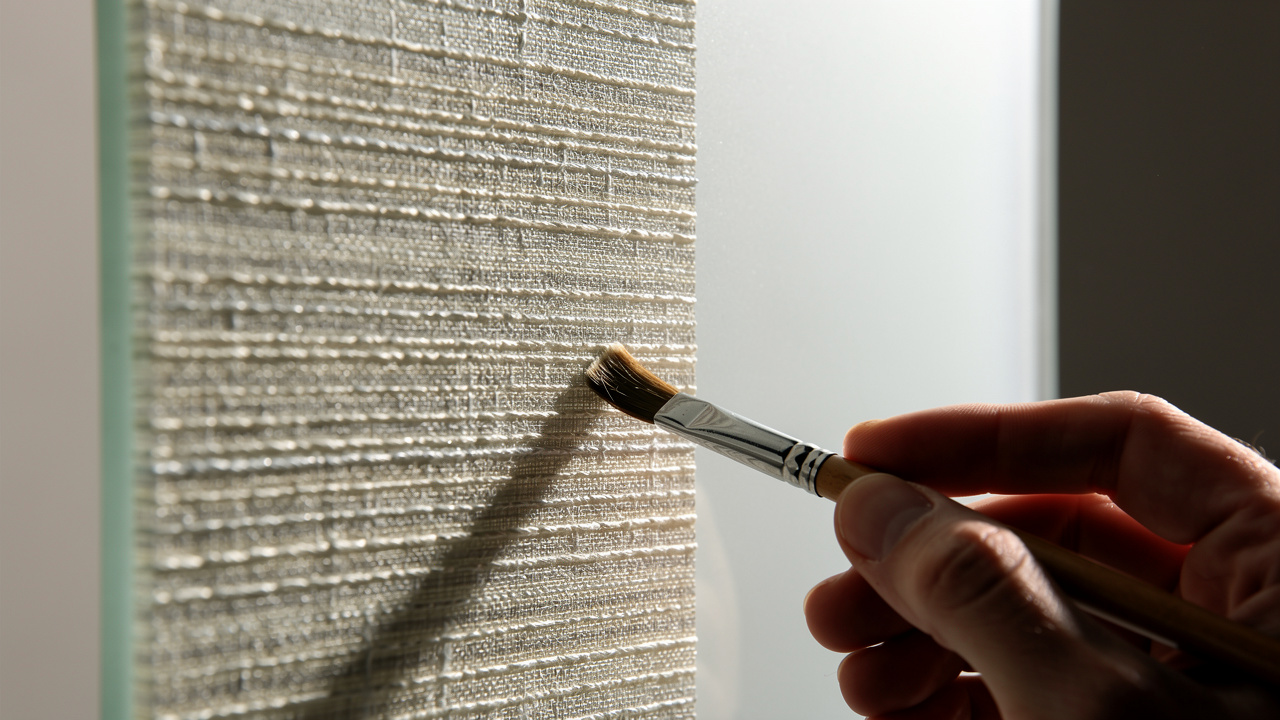
Tactile finishes and white ink control expand what designers can do with glass and sit at the center of many trends in Decorative Glass UV Printing for 2026. Both features come from printing several controlled layers of UV ink rather than a single flat pass. The result opens up new options for touch, privacy, and light without swapping the glass type.
For tactile effects, printers lay down extra ink layers in selected zones so the surface rises slightly above the sheet — a technique supported by recent research on 3D Printing of glasses with tunable photoluminescence via low-temperature nanoscale engineering. You can specify patterns that feel like:
etched lines
woven fabric
carved stone
leather grain
The panel still cleans like standard glass. Consumer research from Nielsen links textured packaging with higher quality perception, and that insight carries neatly into tactile architectural graphics.
White ink layering tackles the classic problem of color on clear or tinted glass, where graphics sometimes look washed out. By printing a white layer under, within, or over colors, printers create full opacity, frosted effects, or zones that pass only part of the light. Retailers and food brands rely on white‑backed prints inside lightboxes, menu boards, and bar fronts so imagery remains strong against bright spotlights.
When you combine tactile passes and white ink in one design, a single panel can guide people by touch, protect views, and still deliver refined imagery. Waseem Printing Services helps project teams test these structures on sample glass before full production so architects, interior designers, and brand managers see the exact effect under real lighting.
Sustainability, Large-Format Capability, and What to Look for in a UAE UV Glass Printing Partner
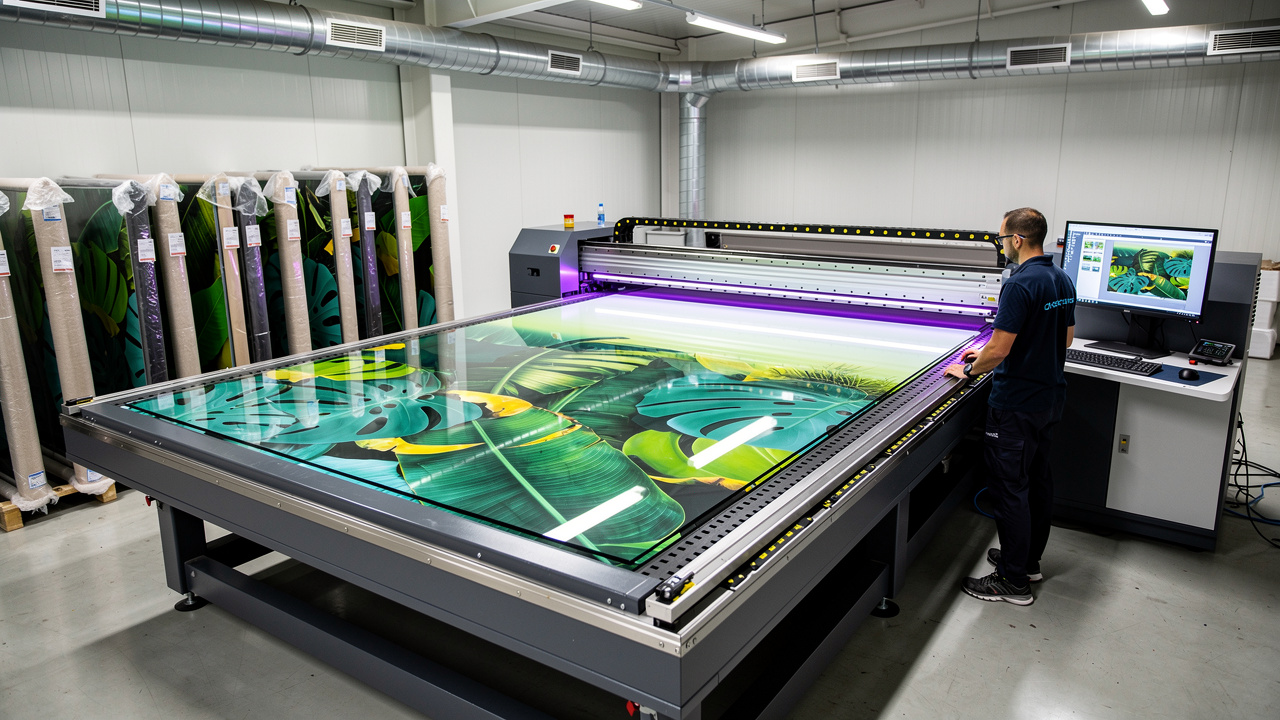
Sustainability, large‑format capability, and the right printing partner now decide whether trends in Decorative Glass UV Printing for 2026 work on real UAE projects. Clients want glass that looks impressive yet also supports green building goals and tight site programs. That mix shapes which technology and supplier you bring onto a job.
UV curing uses inks that release far fewer volatile organic compounds than many traditional solvent systems, which helps keep print rooms and finished interiors healthier. According to the US Green Building Council, the UAE sits among the leading countries for LEED‑certified space outside the United States, so many developers now expect low VOC materials by default. Because UV inks cure instantly, there is little drying area, less waste, and better control of color, all of which support LEED and Estidama scoring. Durable graphics that resist fading, scratching, and moisture also stay in place longer, which reduces the materials you send to landfill over a building life.
On the technical side, architectural projects often call for glass panels several meters long for lobbies, atriums, or façade spandrels. Large‑format UV flatbed printers keep quality consistent across those sizes with tight registration and color control. When an image stretches over many panels, spectrophotometer‑based checks keep every pane aligned so gradients and photos read as one scene — a registration challenge also addressed in research on the Transfer decoration technique on glass curved in three-axis directions. That reliability matters in high‑profile spaces such as airport retail, hotel entrances, and corporate headquarters.
When you choose a UV glass printing partner in the UAE, look for these qualities.
Knowledge of glass substrates, including clear, frosted, tinted, and laminated panels. Teams should know which primers, inks, and curing settings suit each type for long‑term adhesion. Ask to see test pieces that show scratch resistance and back‑lighting performance.
Proven large‑format handling with dedicated racks, lifting gear, and safe packaging methods. Commercial sites rely on glass arriving on time and in sequence for other trades. Experienced printers can coordinate with installers and project managers to cut delays.
Serious color management using profiles, spectrophotometers, and written approval prints. This keeps brand colors consistent from first sample to final roll‑out across many sites. It also avoids surprises when glass sits beside painted walls, flooring, and furniture.
An integrated workflow that covers design support, material advice, printing, and delivery. Waseem Printing Services follows this model for Dubai and international clients, combining industrial flatbed equipment with careful scheduling and clear communication. Because the same team also prints on acrylic, wood, leather, and acoustic panels, you gain one point of contact for an entire scheme.
The Bottom Line
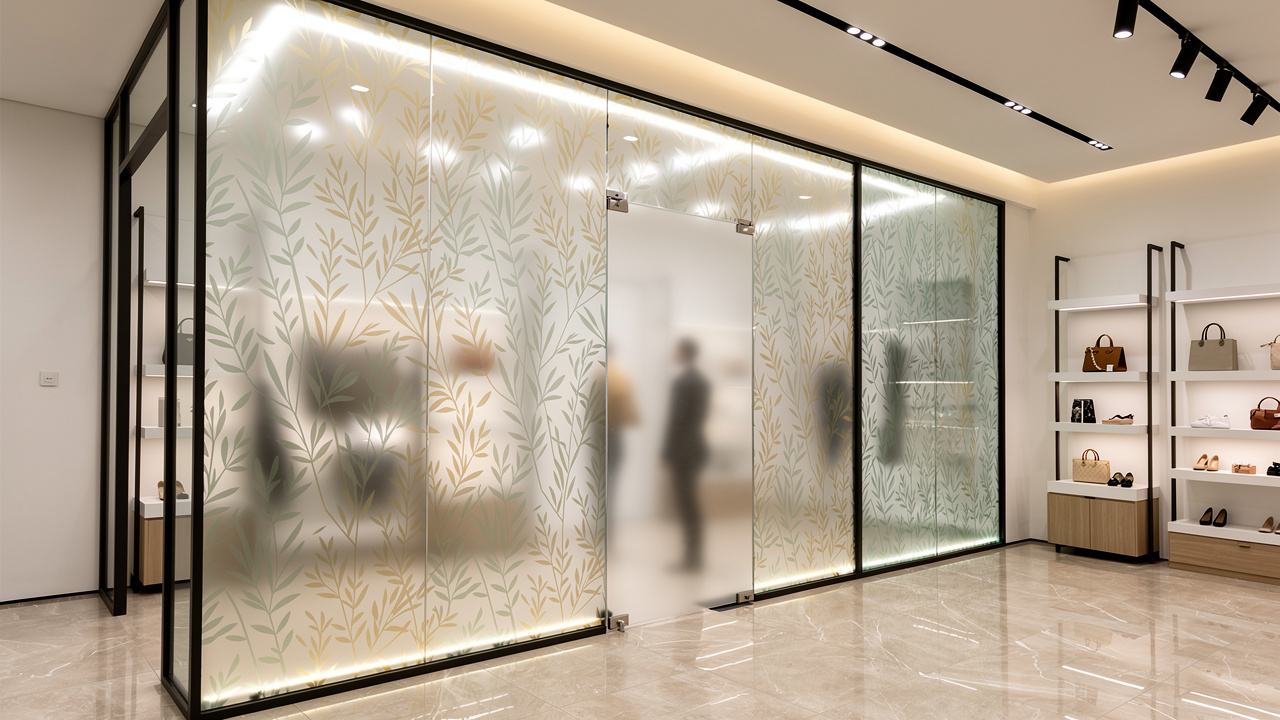
Taken together, trends in Decorative Glass UV Printing for 2026 show how glass has become a central medium for brand, wellness, and acoustic aims. Advances in UV curing, tactile layers, and white ink now let designers treat glass like a flexible graphic surface instead of a static backdrop, a direction reinforced by emerging science on 3D Printing of glasses with tunable UV–VIS–IR photoluminescence properties. At the same time, low VOC inks and strong durability align printed glass with the region‑wide push for greener buildings.
For corporate interiors, retail, hospitality, and events across the UAE, this is a smart moment to rethink how you specify glass. Waseem Printing Services supports that shift with large‑format UV printing on glass and other flat materials, backed by careful color management and project support. Share your next concept early, review samples on real glass, and turn partitions, screens, and façades into clear assets for your brand.
Frequently Asked Questions
How durable is UV printing on glass for high-traffic commercial environments?
UV printing on glass is highly durable for high‑traffic areas. Cured inks form a hard layer that resists scratches, sunlight, and most cleaning chemicals, which suits malls, hotels, and offices. These strengths sit behind many trends in Decorative Glass UV Printing for 2026 and reduce how often graphics need replacement.
Can UV printing be applied to frosted, tinted, or mirrored glass?
Yes, UV printing works on frosted, tinted, clear, and mirrored glass when the right primer and ink settings are used. White ink layers help keep colors strong on darker or translucent substrates. Each glass type gives a different mood, from soft diffused light to bold reflections.
What is the minimum order size for custom decorative glass UV printing?
Digital UV printing allows very low minimum quantities, even a single custom panel. You can order one reception feature, a short meeting room run, or a trial panel for a larger scheme. This fits seasonal campaigns, pilot branches, and concept rooms without wasting budget.
How does UV glass printing support LEED or green building certification projects?
UV glass printing supports green building work by cutting solvent emissions and waste compared with many analog methods. Low VOC inks help indoor air quality credits under LEED and Estidama. Long‑lasting graphics also reduce material use across the building life cycle, which supports environmental targets for owners and tenants.