Introduction
Comparing UV Printed Glass vs Traditional Glass Decoration matters when a brand depends on every surface to tell its story. Many commercial projects still default to older glass decoration even when it limits design, color, and durability.
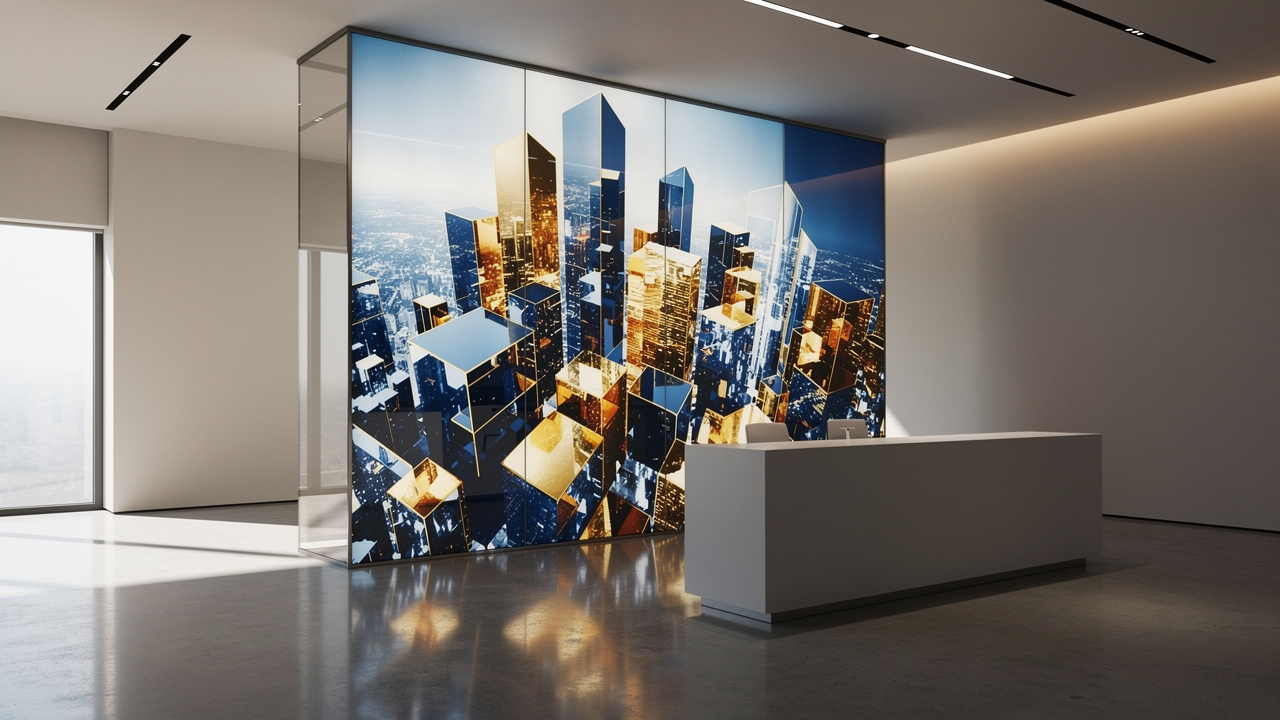
UV printed glass uses UV-curable inks to print directly on glass, giving full-color images, precise logos, and fast turnaround for commercial interiors. This article compares UV printed glass and older decoration, explains where each method fits, and shows how Waseem Printing Services uses industrial UV printing to support architects, designers, and brand teams in real projects.
Ready to see which option fits your next fit-out or rollout best?
Key Takeaways
Before going deeper, this quick list gives the main lessons from comparing UV Printed Glass vs Traditional Glass Decoration for commercial work. It helps frame what follows in practical project terms. Each point connects directly to choices designers and brand managers make every week.
UV printed glass turns plain panels into full-color branded elements. It handles gradients, photography, and fine text with ease. This helps corporate interiors, retail, and hospitality move beyond simple frosting or single-color layouts.
Traditional methods limit color and design detail. They also need long setup and physical tools. That mix slows projects and raises costs when designs change often.
UV printing improves speed and flexibility for short runs. It keeps brand colors consistent panel to panel. Over a full rollout, that reliability matters more than a small per-panel saving.
Waseem Printing Services positions UV printing as the modern standard. The team combines industrial flatbed printers, strict color control, and project-specific sizing. This gives corporate and retail clients a dependable partner from concept to installation.
What Are The Traditional Glass Decoration Methods — And Where Do They Fall Short?
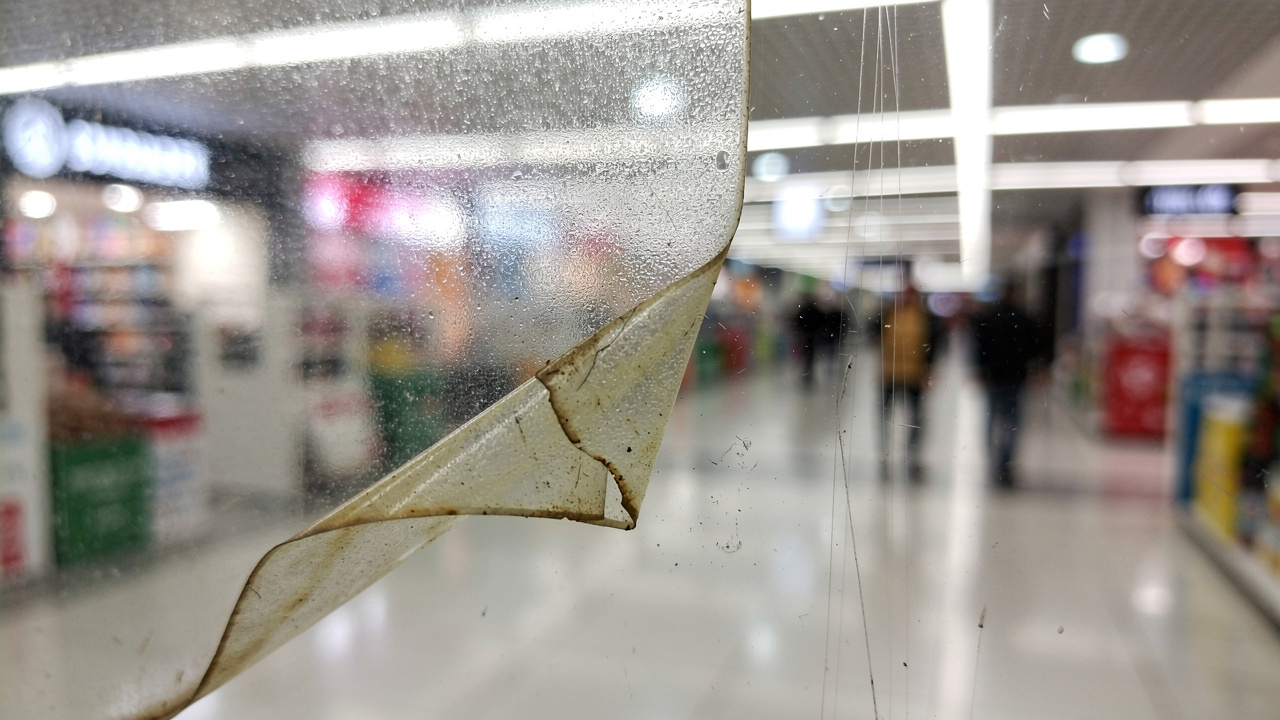
Traditional glass decoration in commercial projects mainly means decals, pad printing, and screen printing. These approaches shaped how brands used glass for decades, yet they were built for another era of production. When comparing UV Printed Glass vs Traditional Glass Decoration for modern interiors, these legacy methods now feel rigid and slow.
Each traditional process depends on physical tools, from adhesive films to etched plates and large screens:
That setup makes sense when printing thousands of identical pieces.
It becomes a problem when a designer needs short runs, location-specific artwork, or frequent refreshes.
Color limits, storage needs, and manual cleanup add more friction on every job.
Shared limits show up fast in commercial projects. Color counts are capped, so gradients and photography rarely work. Layout changes mean new plates or screens. Setup time stretches schedules. According to the International Sign Association, on-premise signage influences about half of new customers for some businesses, so dull or dated glass graphics can hurt performance. When design agility matters, these older methods now sit on the edge of relevance.
Decals, Pad Printing, And Screen Printing — A Side-By-Side Snapshot
This section looks at the three main traditional methods in simple terms so it is easy to see where they fit and where they lag. The goal is to make comparing UV Printed Glass vs Traditional Glass Decoration a straightforward decision, not a guess.
| Method | Color Range | Setup Cost | Run Size Fit | Customization Level | Durability |
|---|---|---|---|---|---|
| Decals | Full color but with visible edges | Low | Any size but best for small batches | Low once designs are printed | Low, peeling and scratching are common |
| Pad Printing | Up to six solid colors | Low to medium | Low to mid volumes | Low, suited to simple logos | Medium, good for branded drinkware |
| Screen Printing | Up to ten solid colors | Medium to high | Best for large flat runs | Medium, each change needs new screens | Medium to high for simple designs |
Decals place a printed sticker onto glass, which leaves an edge that can peel in busy spaces. Pad printing helps on curved glass like tumblers, yet six colors and no gradients limit brand storytelling. Screen printing handles larger flat panels but still cannot show smooth photographic effects. As digital equipment prices fall, these three methods lose ground each year to UV and ceramic printing from providers like Waseem Printing Services and Inkcups.
How Does UV Digital Printing On Glass Work — And What Makes It Superior?
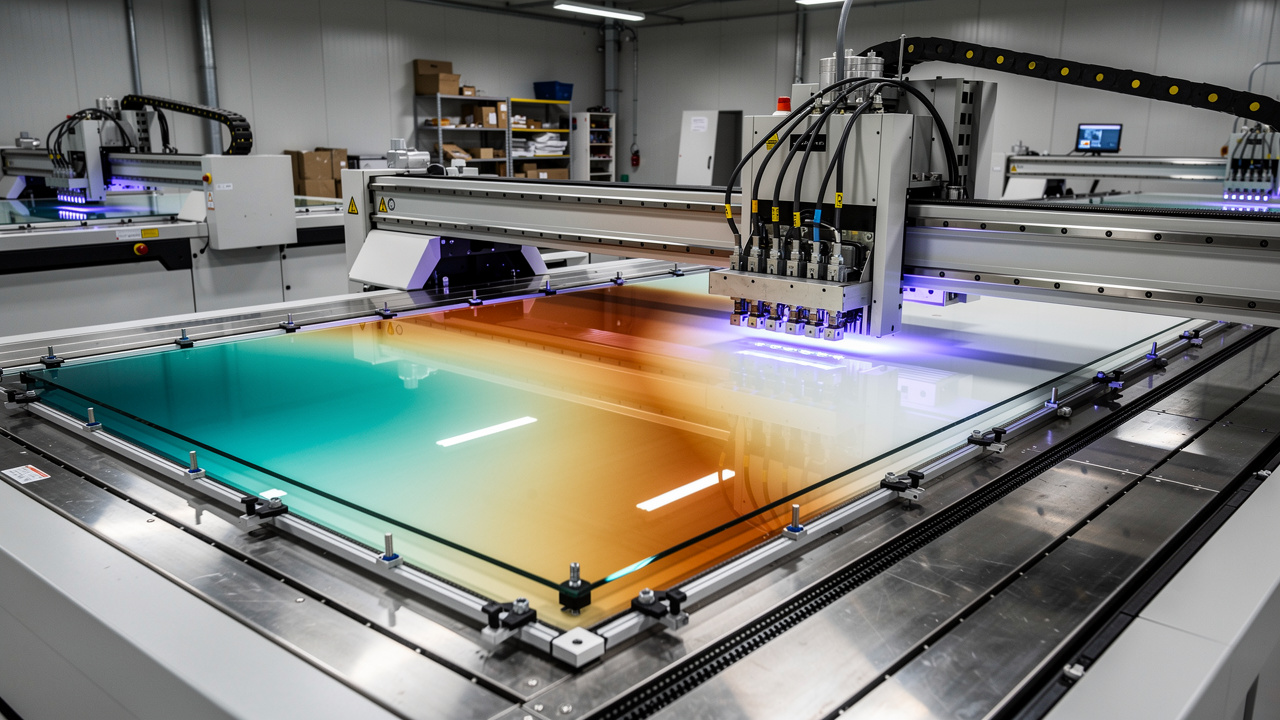
UV digital printing on glass sends a digital file straight to the printer, which jets UV-curable inks onto the panel and cures them using ultraviolet light. The cured ink forms a thin, solid layer bonded to the surface instead of soaking into it. That direct, plate-free workflow changes everything when comparing UV Printed Glass vs Traditional Glass Decoration for commercial interiors.
Because the process is file based, there are no physical plates, films, or screens to make, store, or clean — an approach that also underpins the design of alternatives to stained glass using distributed additive manufacturing, which demonstrates similar efficiency and energy savings. Designs live as files managed through RIP software and color profiles, which brings several advantages:
The same artwork can be printed again months later with consistent color and registration.
Brand teams can keep tight control of Pantone and corporate palettes across many locations.
Updates to text, photography, or layout only require a new file, not new hardware.
A logo panel printed today can be repeated later for a new Dubai office with the same colors and alignment. For brand teams watching Pantone values closely, that repeatability is essential.
UV flatbed printers from manufacturers like Canon and EFI handle large rigid glass panels for partitions, facades, and display cases, and research on the design of additively manufactured glass components continues to expand what is structurally possible with printed glass fixings. Roll systems support films and flexible media. According to Smithers, digital printing already represents a large share of global print by value, driven by this kind of flexible workflow. For architects and corporate designers, that means faster changes, less waste, and visuals that track brand guidelines across continents.
UV Printing Vs. Traditional Methods — Key Performance Differences
When comparing UV printed glass vs traditional glass decoration across key metrics, UV printing comes out ahead in nearly every area that matters to brands. Color uses full CMYK, often with extra channels and white ink, so gradients, photos, and fine artwork print in one pass. Screen and pad printing cannot match that without complex workarounds.
Resolution is another clear gap. UV printers deliver sharp text and patterns at close viewing distances, ideal for reception walls, wayfinding, and display glass — a precision that also applies to curved surfaces, as explored in research on the transfer decoration technique on glass curved in three-axis directions. Traditional methods favor bold shapes and thicker lines, which work for simple logos but not for high-end corporate interiors.
Customization and speed also shift the balance. No plates mean one office partition or one hundred can run in the same session, each with different names or locations if needed. Turnaround shrinks because pieces leave the bed fully cured and ready for packing.
“Design is not just what it looks like and feels like. Design is how it works.”
Steve Jobs, Co-founder of Apple
That idea matches UV workflows well, where the design file connects directly to production without extra physical steps.
Why Waseem Printing Services Delivers The Best UV Glass Printing Results
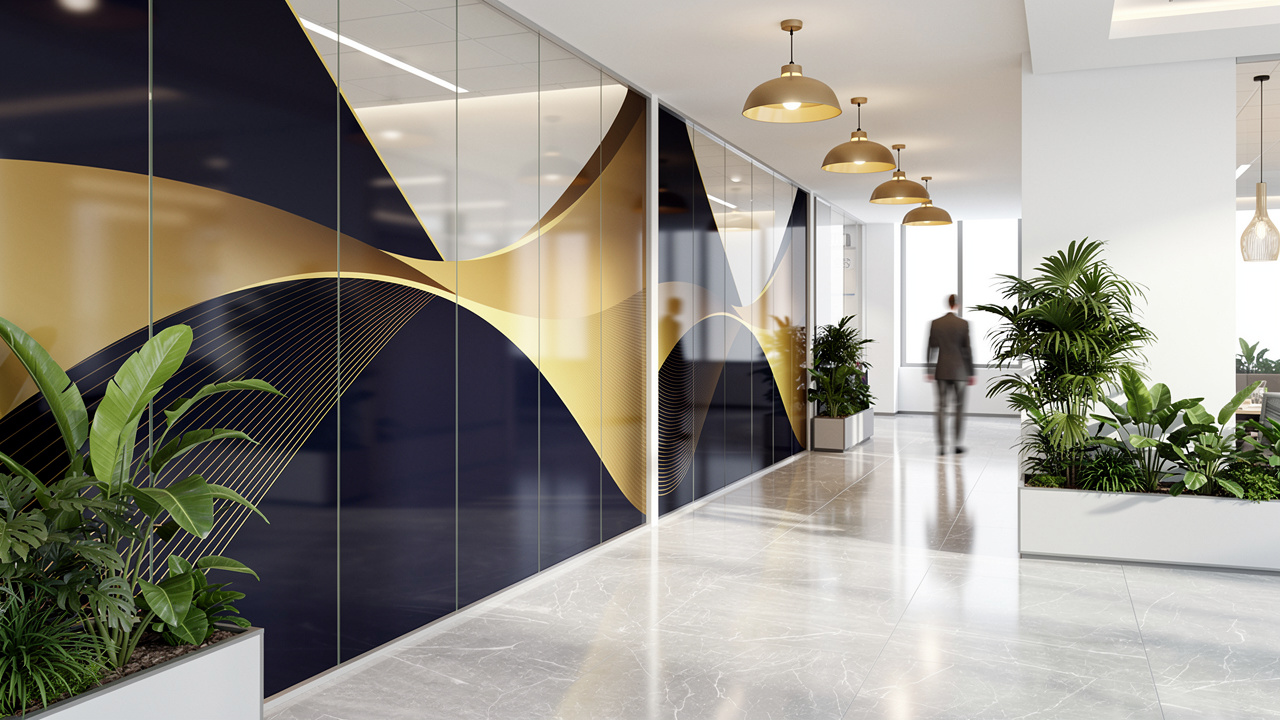
Waseem Printing Services focuses on UV printing as a core capability, not a side add-on. The team runs industrial flatbed UV printers that handle large glass panels with precise registration and sharp detail. For commercial interiors, this means a reception wall in Dubai and a matching wall in New York can share the same look and color tone.
Color control sits at the center of every project. Waseem Printing Services uses calibrated workflows to keep Pantone and brand palettes accurate from proof to final glass panel, an approach consistent with the structured engineering principles found in the design of additively manufactured glass components for commercial applications. Research from Loyola University Maryland shows that color raises brand recognition by up to eighty percent, so drifting hues across panels are more than a small technical flaw. They weaken brand memory in lobbies, showrooms, and hospitality spaces.
Another strength is custom sizing. Instead of forcing designs into standard panel formats from a screen printing shop, Waseem prints to the dimensions that architects and interior designers specify. This helps align artwork with hardware, mullions, and acoustic layouts. At the same time, Waseem applies similar UV quality across acrylic, MDF, leather, and acoustic panels so multi-material interiors share one visual language.
According to the U.S. Green Building Council, buildings account for about forty percent of global energy related emissions, which keeps pressure on projects to align with LEED and ESG goals — a challenge also addressed in work on the design of alternatives to stained glass that quantifies energy efficiency and economic savings from modern glass decoration techniques. Waseem’s UV process uses inks that cure without harmful solvent fumes, and glass itself remains fully recyclable. That combination supports responsible specification for corporate clients across the UAE and beyond.
Tip: Request a full-size sample panel under project lighting before sign-off. Seeing the glass installed on site (or in a mock-up) catches readability and color issues early, when changes are still inexpensive.
Here is how Waseem Printing Services organizes its main UV glass work for commercial clients:
Architectural and interior glass panels support offices, schools, and health spaces. Designs can include privacy bands, full-height graphics, or subtle patterns. Panels arrive ready for installers, which shortens the time between design approval and site completion.
Retail and hospitality glass signage covers store fronts, menu boards, lift lobbies, and feature walls. High resolution images help brands like boutique hotels and cafes stand out in a crowded Dubai mall or airport. Durable ink means staff can clean glass daily without worrying about damage.
Corporate branding on glass focuses on executive suites, meeting rooms, and reception desks. Consistent logos and typography matter most in these areas, especially for regional headquarters serving global clients. Waseem keeps files organized so refresh work later stays aligned with the original fit-out.
Exhibition and event glass displays give marketing teams striking backdrops without heavy structures. Panels can show photography, maps, or brand stories and then move to office use after the show. This reuse supports budget control and reduces waste across campaigns.
When Should You Choose UV Printing Vs. A Traditional Method?
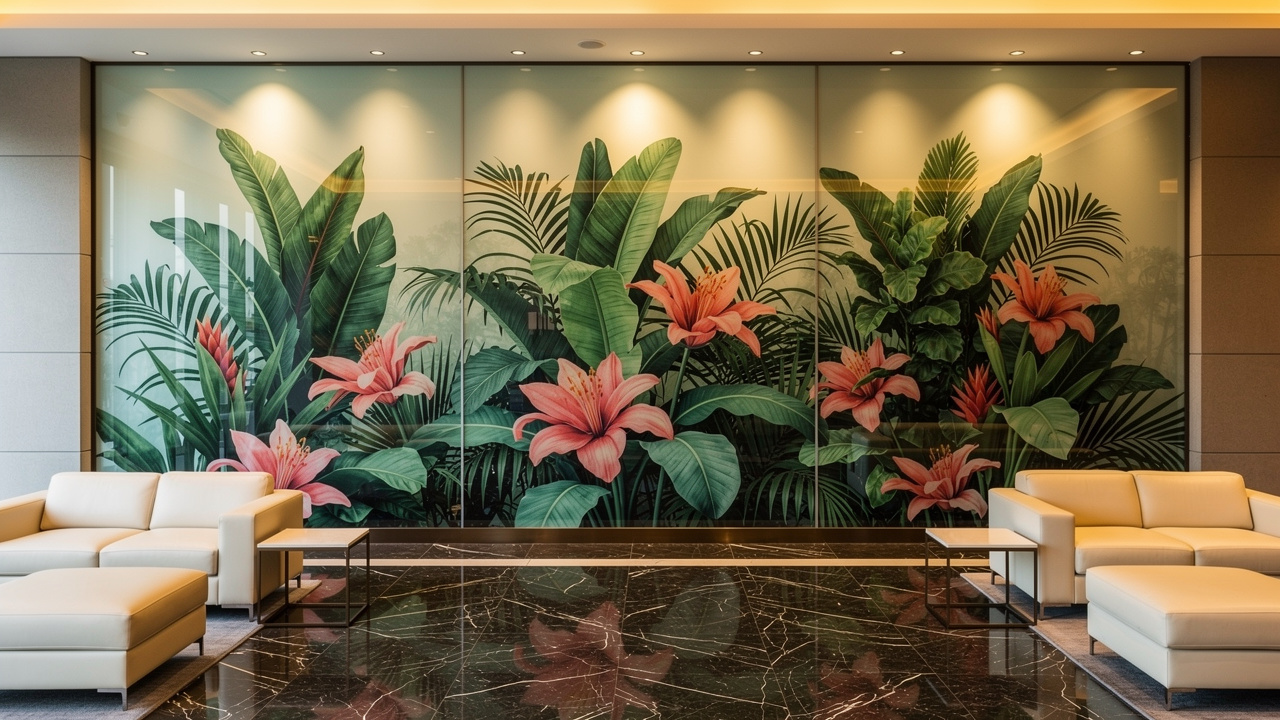
Choosing between UV printing, screen printing, and pad printing depends on design complexity, run size, and glass shape. For most branded interiors, comparing UV Printed Glass vs Traditional Glass Decoration quickly points toward UV as the better fit. Yet certain narrow use cases still support older processes.
UV digital printing shines when designers need gradients, photos, or complex layouts on flat panels. It suits short runs, single panels, and variable data work for corporate rollouts.
Pad printing stays useful on curved pieces like drinkware, where the object shape makes flatbed printing difficult.
Screen printing mainly serves very large runs of simple, repeated graphics where the same artwork runs for long periods.
Budget discussions should look beyond per-piece ink cost. Plate making, screen storage, cleanup time, and rework all sit on the traditional side of the ledger. UV printing avoids much of that by staying fully digital, which keeps projects smoother once design changes begin.
“Less is more.”
Ludwig Mies van der Rohe, Architect
That principle fits glass graphics well: use traditional methods for simple, repeating marks, and choose UV printing when the brand story relies on detailed imagery.
| Method | Best Use Case | Color Capability | Setup Cost | Recommended For |
|---|---|---|---|---|
| UV Digital Printing | Flat interior glass panels with detailed artwork | Full CMYK with gradients and white ink | Low, file based workflow | Corporate interiors, retail signage, hospitality walls |
| Screen Printing | Very large runs of simple flat graphics | Up to ten spot colors | High, each color needs a screen | Commodity glass, repeat safety markings |
| Pad Printing | Curved or irregular glass items | Up to six spot colors | Low to medium | Branded drinkware and small promotional items |
For corporate interiors, branded acoustic glass, retail windows, and hospitality feature walls, UV printing with Waseem Printing Services offers better visuals, faster changes, and more reliable color than traditional decoration.
The Bottom Line
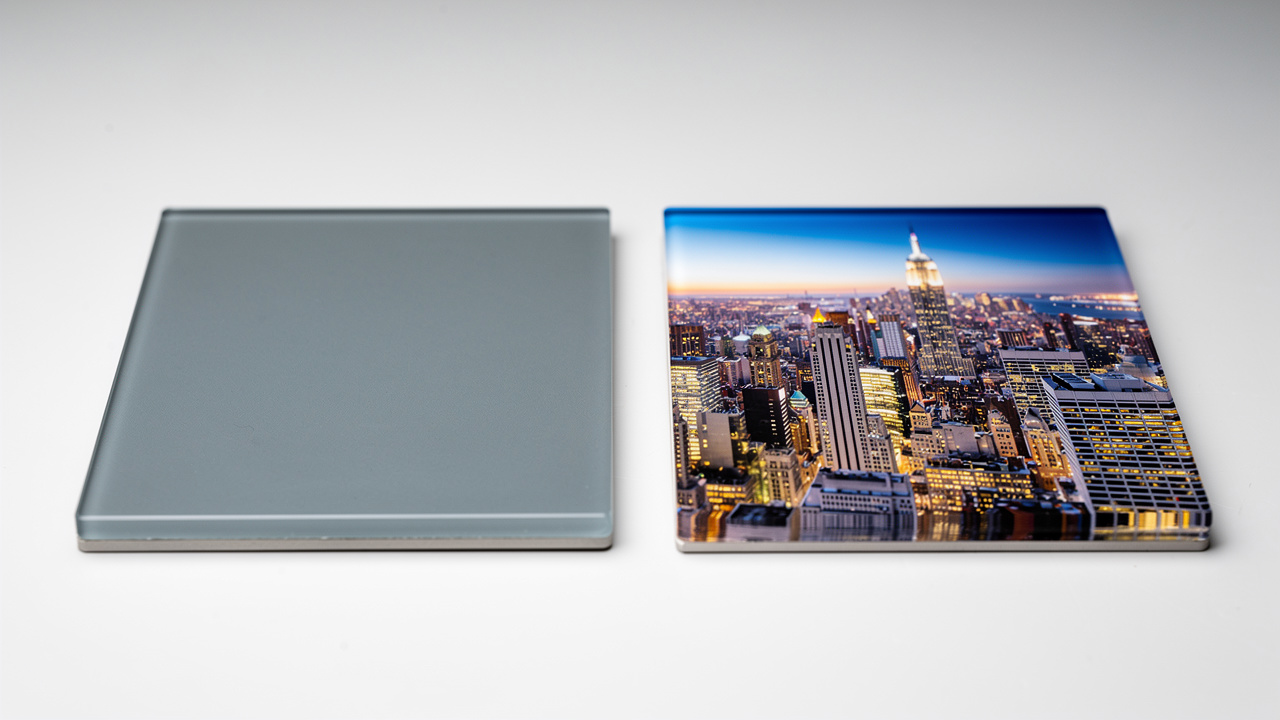
Comparing UV Printed Glass vs Traditional Glass Decoration across color, flexibility, and workflow shows a clear pattern. UV digital printing gives brands full control over imagery, fast response to change, and long-lasting prints that handle real-world cleaning and wear. Traditional methods still play a part for simple, high-volume items, yet they struggle with modern branding needs.
Waseem Printing Services brings industrial UV glass printing, color accuracy, and custom sizing together for corporate designers, architects, and brand teams in Dubai, the wider UAE, and international markets. When glass needs to carry a message as clearly as a screen or brochure, UV printed panels offer a reliable path.
Conclusion
Glass decoration has moved from simple frosting and single-color logos to full-color storytelling on large surfaces. Digital UV printing sits at the center of that change, giving architects, corporate designers, and marketers a practical way to align every glazed surface with brand intent.
Traditional decoration methods helped build the industry, yet their dependence on plates, films, and manual steps slows current projects. By contrast, UV printed glass pairs color accuracy with flexible production and better durability for busy interiors. Waseem Printing Services stands ready to guide project teams through this shift with modern UV workflows that respect brand standards and project timelines.
Frequently Asked Questions
Is UV-Printed Glass More Durable Than Screen-Printed Glass?
Yes, UV-printed glass is generally more durable in busy commercial interiors. UV inks cure into a solid layer that bonds tightly to pre-treated glass, so prints resist moisture, sunlight, and routine cleaning. Screen inks rely on chemical agents and thicker layers that can wear faster where people touch or clean often. For hotel lobbies, retail floors, and office partitions, UV printing usually holds its appearance longer.
Can UV Printing On Glass Reproduce Exact Brand Colors And Logos?
Yes, UV printing can match brand colors and logos with high accuracy. The process uses full CMYK color plus extra channels and white ink, managed by color profiles and calibrated devices. Unlike screen or pad printing, it does not limit the number of hues in a layout. Waseem Printing Services maintains strict color control so multi-panel or multi-location projects stay consistent for marketing and brand teams.
What Types Of Glass Surfaces Can Be UV Printed?
UV printing works best on flat glass panels used in partitions, doors, signage, and decorative walls. Before printing, the surface usually needs flame, Pyrosil, plasma treatment, or a primer like MagiCoat from Inkcups to help adhesion, and emerging research on the transfer decoration technique on curved glass surfaces offers further insight into how decoration layers are selectively applied to complex geometries. After proper preparation, industrial flatbed UV printers can handle clear, tinted, or back-painted glass used in offices, retail stores, hotels, and exhibition spaces.
Is UV Printing On Glass Cost-Effective For Small Or Single-Panel Orders?
Yes, UV printing is well suited to small batches and one-off panels. There are no plates or screens to build, so setup time stays short and design changes cost far less than with traditional printing. One custom feature wall for a flagship store and a full set of panels for a regional office follow almost the same workflow. That efficiency supports custom branding without wasted budget.
How Does UV-Printed Glass Compare To Vinyl Wraps For Retail And Hospitality Use?
UV-printed glass provides a more refined and durable finish than vinyl wraps. Vinyl is an adhesive layer that can bubble, shrink, or peel at the edges, especially in humid kitchens or crowded corridors. UV printing bonds ink directly to the glass, leaving no raised edges and no film to fail. According to the U.S. Environmental Protection Agency, glass can be recycled many times without quality loss, so printed panels can support long-term design and sustainability goals.